








Punjab Clears Three Digital Universities, Opening a New Route for Online Higher Education
Punjab has taken a major step towards expanding online higher education after the state Assembly passed legislation for three private digital universities. The move could change how students access...


Punjab has taken a major step towards expanding online higher education after the state Assembly passed legislation for three private digital universities. The move could change how students access degree programmes, with the proposed institutions designed around online classes, digital assessments, virtual laboratories and other technology-based learning tools.
The three Bills passed by the Punjab Vidhan Sabha are the Cloud University, Hoshiarpur Bill, 2026, the MS Digital University, Patiala Bill, 2026, and the Physicswallah Digital University, Patiala Bill, 2026. The Bills were passed on 10 August during the final day of the Assembly’s monsoon session. They now require the Governor’s assent before becoming law.
The proposed universities will operate under Punjab’s Private Digital Open Universities Policy, 2026, which was notified in January. The policy allows private institutions to establish universities where students can complete undergraduate, postgraduate and professional programmes through digital and online modes instead of attending conventional classroom-based courses.
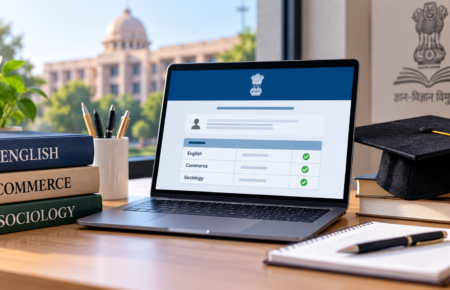
The model is built around technology. The universities are expected to use online teaching, digital examinations, virtual laboratories, Learning Management Systems, digital content studios, AI-enabled learning tools and student support services. Their physical sites will mainly serve as administrative headquarters rather than traditional campuses filled with classrooms.
The three proposed institutions will be located in Punjab. Cloud University is planned at Bohan on the Hoshiarpur-Chandigarh Road and is promoted by the Rayat and Bahra Group. MS Digital University is planned at Fatehpur village in Patiala district, while Physicswallah Digital University is proposed at Nandpur Kesho village in Patiala and is linked to NextSeed Foundation, associated with edtech company Physics Wallah.
The universities are expected to cover a wide range of subjects, including engineering, medical and paramedical sciences, life sciences, humanities, liberal arts, management and social sciences. However, the proposed model has also raised questions about how courses requiring laboratory work, clinical training or other practical learning will be delivered fully online.
The government has said the universities will have to follow University Grants Commission regulations governing online and open distance learning. They will also need to comply with the National Credit Framework, the Credit Framework for Online Learning and the Academic Bank of Credits. Recognition under the applicable national regulations will remain important before degrees can be awarded.
The policy also sets financial and operational conditions for private operators. The universities will be self-financed, with no financial assistance from the Punjab government. Sponsors must maintain a minimum corpus of ₹20 crore and have at least five years of credible experience in online education. At least 15% of seats will be reserved for students domiciled in Punjab.
There are also safeguards around technology and student rights. AI-generated educational content must be identified, reviewed and approved by academic bodies. The framework provides for student grievance systems and an Ombudsman, while violations of UGC or other applicable norms can attract penalties of up to ₹25 lakh.
For students, the biggest potential benefit is flexibility. Online universities could allow working professionals, students living away from major education centres and people who cannot relocate to pursue higher education without attending a conventional campus. At the same time, the success of the model will depend on quality control, recognition, practical training and reliable digital access.
Punjab’s experiment therefore goes beyond simply putting lectures online. It is an attempt to create universities where digital delivery forms the core of the academic model. The coming months will show whether this approach can combine wider access with the academic standards students expect from a university.




No Comment! Be the first one.