








India’s Education-to-Employment Gap: Why Degrees Alone May Not Be Enough for Young Indians
India has expanded access to education and skill development over the past decade, but a major gap remains between what young people learn and what the job market needs. A recent NITI Aayog report,...

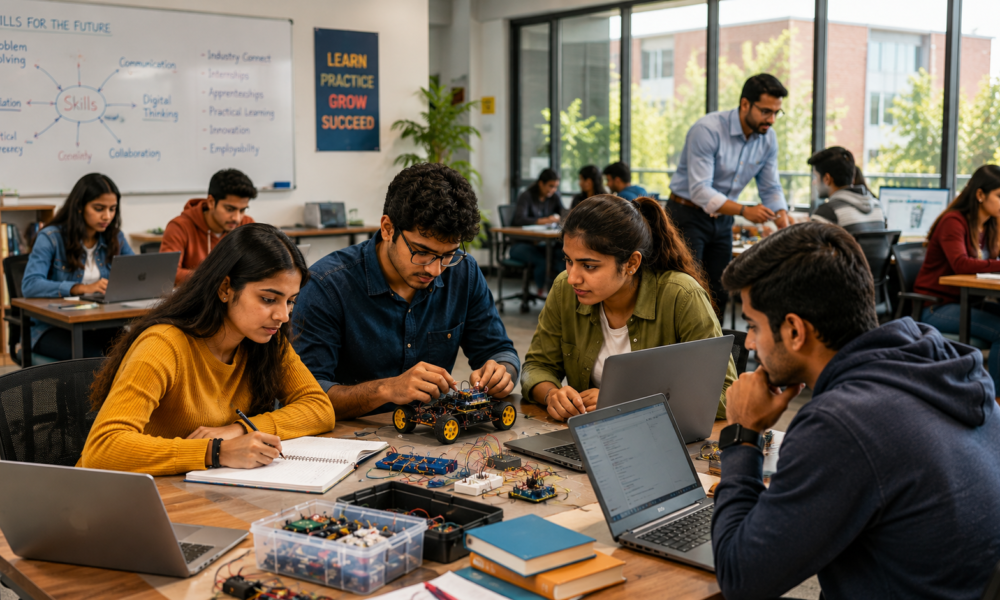
India has expanded access to education and skill development over the past decade, but a major gap remains between what young people learn and what the job market needs.
A recent NITI Aayog report, Reimagining Skilling for Viksit Bharat@2047, estimates that 8.7 crore Indians aged 15 to 29 were not in education, employment or training in 2021. The group includes young people who are unemployed as well as those who are outside formal education and training. The report is based on data from the 78th round of the National Sample Survey.
At the same time, India has trained more than 7.67 crore people since 2014-15 through various skill development programmes. The numbers show that the country is not simply facing a shortage of training programmes. The bigger challenge is ensuring that education and training lead to useful skills, employment and better career opportunities.
The gap between education and jobs
One of the key concerns highlighted by the report is the weak connection between educational qualifications and employment. NITI Aayog found that only 8.25% of graduates are employed in jobs that match their qualifications.
This raises an important question for students and families: Is completing a degree enough to secure a suitable job?
For many young people, the answer may increasingly depend on what they can do, rather than only what qualification they hold. Employers are looking for practical knowledge, communication, digital skills, problem-solving abilities and experience that can be applied in the workplace.
The report therefore recommends moving towards more industry-aligned education, apprenticeships and work-integrated degree and diploma programmes. It also suggests flexible learning models that allow people to earn while they learn.
Skilling needs to begin earlier
NITI Aayog has also suggested bringing employability and vocational learning further into schools.
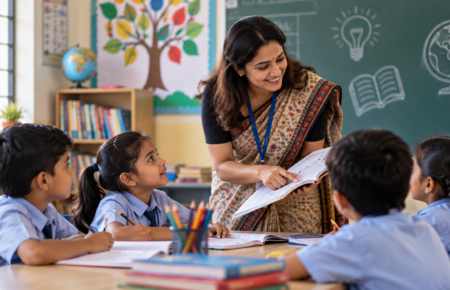
The report proposes general employability and entrepreneurship skills from Class 6 to Class 12, along with structured vocational pathways from Class 9.
This could give students an opportunity to understand different careers before they complete school. Instead of treating vocational education as an alternative for students who do not pursue conventional academic routes, the system could make practical skills a normal part of education.
The report notes that fewer than one in 12 secondary schools currently offer vocational subjects, showing the size of the gap between policy goals and what students experience in classrooms.
Why apprenticeships matter
Another major recommendation is to expand apprenticeships.
Apprenticeships can give students and young workers an opportunity to learn while working in a real organisation. This can help bridge the gap between classroom knowledge and workplace expectations.
NITI Aayog has suggested stronger incentives for small and medium-sized businesses to offer apprenticeships and a unified platform where students can find credible opportunities.
The government already runs programmes such as the Pradhan Mantri Kaushal Vikas Yojana, National Apprenticeship Promotion Scheme and Jan Shikshan Sansthan under the Skill India programme. The government says these programmes aim to provide skill, reskilling and upskilling opportunities across different sections of society.
What this means for students
For students, the message is increasingly clear. A degree can remain important, but it may need to be supported by practical skills, internships, apprenticeships and industry exposure.
The future of education could therefore move towards a model where academic knowledge and employability are developed together.
India’s challenge is no longer simply about putting more young people through classrooms or training programmes. It is about making sure that the learning they receive helps them move confidently into work.
The bigger education story is becoming less about how many people are trained and more about what happens after the training ends.




No Comment! Be the first one.