








Teach For India Joins Shikshagraha to Strengthen One Million Public Schools
Teach For India has joined Shikshagraha, a nationwide movement working to improve one million public schools across India. The partnership brings together Teach For India’s experience in...

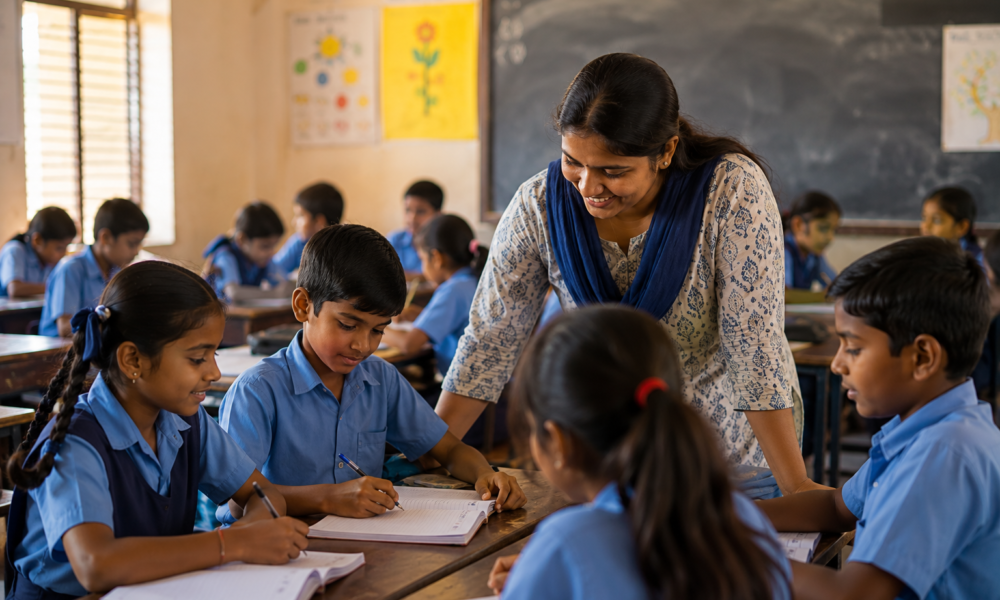
Teach For India has joined Shikshagraha, a nationwide movement working to improve one million public schools across India. The partnership brings together Teach For India’s experience in developing teachers and young leaders with Shikshagraha’s network of organisations working with schools and communities.
The partnership is aimed at improving the quality of public education by putting greater emphasis on teachers, school leaders, parents, young people and local communities. Shikshagraha says it has already mobilised more than 3.9 lakh leaders across 2.1 lakh public schools, resulting in more than 15.6 lakh small improvements, including nearly 45,000 led by communities.
The movement’s larger goal is ambitious: to strengthen one million public schools so that children have better learning opportunities and are better prepared for the future. Shikshagraha works with more than 40 civil society organisations across 16 states, bringing together people who are already working to improve government schools.
For Teach For India, the partnership adds a much wider platform to its work in education. The organisation has spent 17 years developing teachers, Fellows and alumni who work with children and communities. Its programmes focus on building leadership through classroom experience and then extending that work into schools and wider communities.
Under the partnership, Teach For India’s experience will contribute to Shikshagraha’s leadership and Fellowship programmes. This will include work on curriculum, coaching and assessment. Teach For India’s Fellows and alumni will also have opportunities to participate in the wider movement across different locations.
Another part of the partnership will involve sharing examples from classrooms and communities. The aim is to identify approaches that work, document them and make it easier for other schools and organisations to use them.
This matters because improving public education cannot depend only on adding infrastructure or introducing new technology. Teachers need support, school leaders need training and communities need ways to participate in decisions affecting their schools.
The partnership also reflects a growing focus on collective action in Indian education. Rather than several organisations working separately on similar problems, the model attempts to connect their experience and resources around a common objective.
For schools, this could mean access to better leadership programmes, teacher support and locally developed solutions. For communities, it could create more opportunities to participate in school improvement. For students, the intended outcome is better learning and a stronger connection between schools and the communities they serve.
The scale of the target makes implementation the biggest challenge. One million schools represent a huge and diverse group of institutions spread across different states, languages and local conditions. A model that works in one area may need to be adapted before it can work elsewhere.
The partnership’s success will therefore depend on whether good ideas can move beyond individual schools and become part of everyday school practice.
The bigger question is not simply how many schools are reached. It is whether the effort can help create better classrooms, stronger teachers and more involved communities at scale.
That will determine whether the one-million-school ambition becomes a measurable change in public education or remains a large national target.






No Comment! Be the first one.