








Punjab Becomes First Indian State to Introduce AI Education from Class 1 to 12
Artificial intelligence is steadily becoming part of everyday life, from online searches and digital assistants to healthcare and finance. Now, Punjab is bringing AI into classrooms in a move that...

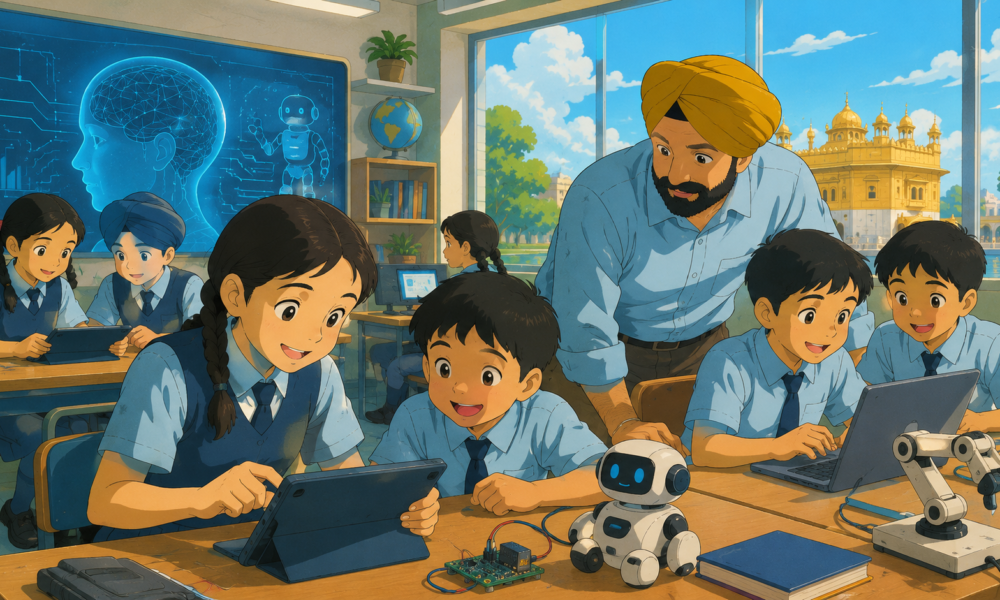
Artificial intelligence is steadily becoming part of everyday life, from online searches and digital assistants to healthcare and finance. Now, Punjab is bringing AI into classrooms in a move that could reshape school education across India.
Punjab has become the first state in the country to introduce artificial intelligence as a mainstream subject for students from Class 1 to Class 12. The initiative aims to equip children with digital skills from an early age while encouraging responsible and ethical use of emerging technologies.
The rollout will begin in phases. During the first stage, AI education will be integrated into the Computer Science curriculum for students in Classes VIII to XII. Over time, the programme will expand to younger students with age-appropriate learning modules designed to introduce AI concepts through activities, games and practical problem-solving rather than complex programming.
Unlike traditional technology lessons that focus mainly on coding, the new curriculum seeks to help students understand how AI works, where it is used and the ethical questions it raises. Topics such as responsible AI use, digital safety, critical thinking, data literacy and creativity are expected to become key learning outcomes.
Education experts believe this marks a significant shift in India’s school education system. As AI continues to transform industries including healthcare, manufacturing, banking and media, employers are increasingly seeking graduates who understand how to work alongside intelligent technologies rather than simply operate computers.
Early exposure to AI could also help reduce the future digital skills gap. By introducing foundational concepts during school years, students may be better prepared for higher education, research and careers in emerging technology fields. More importantly, the initiative focuses on helping learners question AI outputs, recognise misinformation and use technology responsibly instead of relying on it unquestioningly.
The move aligns with India’s broader push towards digital education under the National Education Policy and complements several national initiatives promoting AI literacy among teachers and students. Across the country, governments, educational institutions and technology companies are investing in teacher training, digital infrastructure and AI-powered learning tools to prepare classrooms for the future.
Punjab’s decision could encourage other states to adopt similar reforms. Education specialists note that introducing AI at school level requires more than updated textbooks. Teacher training, classroom resources, internet connectivity and practical learning opportunities will be equally important to ensure successful implementation.
For parents, the initiative signals that future employability will increasingly depend on digital competence alongside traditional academic subjects. Understanding AI is likely to become as essential as digital literacy has become over the past two decades.
Students, meanwhile, stand to benefit from a curriculum that connects classroom learning with real-world technologies. Rather than viewing AI as an abstract concept, they will have opportunities to explore how it supports healthcare diagnoses, climate research, financial services, language translation and scientific discovery.
The programme also reflects a growing recognition that AI education is not solely about preparing future software engineers. Critical thinking, ethical judgement, communication and problem-solving will remain central skills as intelligent technologies become more deeply integrated into everyday life.
If implemented effectively, Punjab’s initiative could become a model for modernising school education across India. By introducing AI from the earliest years of learning, the state is positioning its students to participate confidently in a rapidly evolving digital economy while encouraging responsible use of one of the most transformative technologies of the century.





No Comment! Be the first one.