








National Engineers’ Day 2026: Why Is It Celebrated on September 15?
National Engineers’ Day 2026: India celebrates National Engineers’ Day every year on September 15 to commemorate the birth anniversary of Mokshagundam Visvesvaraya, one of the country’s most...

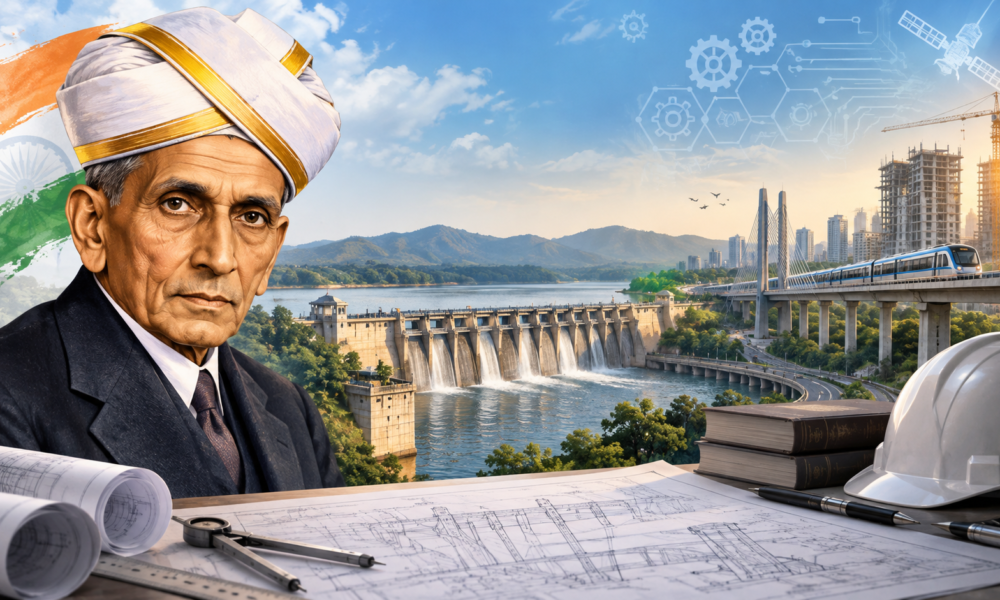
National Engineers’ Day 2026: India celebrates National Engineers’ Day every year on September 15 to commemorate the birth anniversary of Mokshagundam Visvesvaraya, one of the country’s most respected engineers, statesmen and planners.
Born on September 15, 1861, in Muddenahalli, Karnataka, Visvesvaraya made significant contributions to irrigation, flood management, infrastructure and industrial development. His work played an important role in shaping modern engineering practices in India.
Who Was M Visvesvaraya?
M Visvesvaraya initially studied arts at the University of Madras before pursuing civil engineering at the College of Science in Pune.
He later became the Diwan of Mysore from 1912 to 1918, where he was involved in several major infrastructure and development initiatives. His contributions to the princely state earned him the reputation of being the “Father of Modern Mysore.”
His engineering work covered areas such as water management, irrigation and flood control.
Following the devastating 1908 Musi River floods, Visvesvaraya worked on flood-control measures and was associated with the planning of reservoirs including Osman Sagar and Himayat Sagar. He also contributed to measures aimed at protecting Visakhapatnam port from sea erosion.
As Chief Engineer of Mysore, he played an important role in the development of the Krishna Raja Sagara (KRS) Dam, which helped support irrigation and agriculture in the region. He was also associated with the use of automatic sluice gates for improved water regulation.
From Engineer to Bharat Ratna Awardee
Visvesvaraya was not only an engineer but also an author and economic thinker.
He wrote books including “Planned Economy for India,” “Reconstructing India” and “Memoirs of My Working Life,” covering subjects such as industrialisation, infrastructure, education and governance.
In recognition of his contributions to engineering and public service, the Government of India awarded him the Bharat Ratna, the country’s highest civilian honour, in 1955.
Why Is Engineers’ Day Celebrated?
National Engineers’ Day is observed to recognise the contribution of engineers to India’s economic, technological and social development.
Today, engineers work across sectors ranging from roads, bridges, dams and metro systems to defence, space, nuclear energy, artificial intelligence, robotics and digital infrastructure.
India produces nearly 1.5 million engineering graduates every year, according to the Press Information Bureau.
The country’s technical education ecosystem includes 23 IITs, 31 NITs and 26 IIITs as of 2026, forming an important part of India’s engineering and technology landscape.
From digital public infrastructure such as Aadhaar, UPI and DigiLocker to emerging fields such as AI, semiconductors, quantum computing, renewable energy and deep technology, engineers are playing an increasingly important role in India’s development.
National Engineers’ Day therefore serves as both a tribute to Visvesvaraya and a reminder of the role engineering and innovation can play in building Viksit Bharat by 2047.






No Comment! Be the first one.