







Karnataka Plans AI Education From Class 6: What It Means for School Students
Karnataka is planning to introduce artificial intelligence education from Class 6 as part of new school programmes. The proposed move reflects the growing focus on introducing students to emerging...

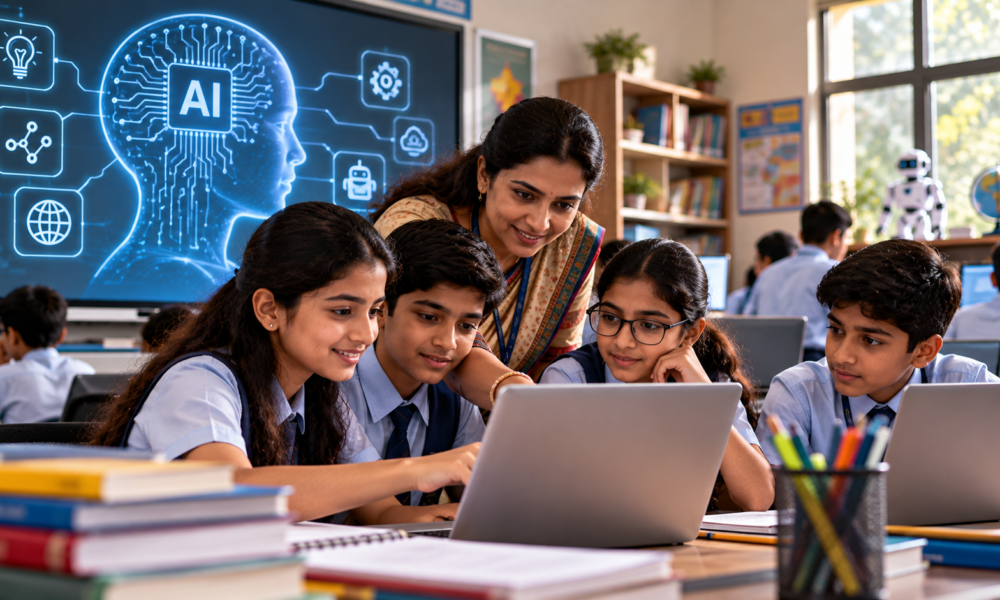
Karnataka is planning to introduce artificial intelligence education from Class 6 as part of new school programmes.
The proposed move reflects the growing focus on introducing students to emerging technologies at an earlier stage of their education.
Why is AI entering school education?
Artificial intelligence is increasingly being used in areas such as communication, healthcare, finance, manufacturing, media and education.
As these technologies become more common, schools are exploring ways to help students understand how AI works and how it can be used responsibly.
Introducing AI at school level does not necessarily mean that students need advanced programming skills.
Basic AI education can include concepts such as algorithms, data, machine learning, digital safety and responsible use of technology.
Why start from Class 6?
Students in middle school are already familiar with smartphones, computers and online platforms.
Introducing structured lessons at this stage could help move technology use beyond simple consumption.
Students can learn how digital systems make decisions and how data is used to produce results.
The approach can also encourage students to think critically about information generated by technology.
Teachers will be important
Introducing a new subject or learning area requires teacher preparation.
Teachers may need training in basic AI concepts, classroom activities and responsible technology use.
The quality of implementation will therefore depend not only on the curriculum but also on teacher support and access to suitable learning resources.
What should students learn?
School-level AI education can focus on simple and practical concepts.
Students could learn the difference between human decision-making and machine-based systems, how data affects AI outputs, why online privacy matters and how AI-generated information should be checked.
The focus can remain on understanding rather than making every student a programmer.
The wider education trend
The move comes as schools and universities across India increasingly discuss AI skills.
For students, early exposure could become useful as technology changes the skills required across different careers.
At the same time, education systems need to ensure that technology does not replace basic learning skills such as reading, writing, mathematics, reasoning and communication.
AI education is therefore likely to work best when treated as an additional skill that supports wider learning.




No Comment! Be the first one.