







Punjab Police Constable Exam Preparation: How Candidates Can Plan Their Study
Preparing for the Punjab Police Constable examination requires more than simply studying for several hours every day. Candidates need a structured plan that combines written-test preparation,...

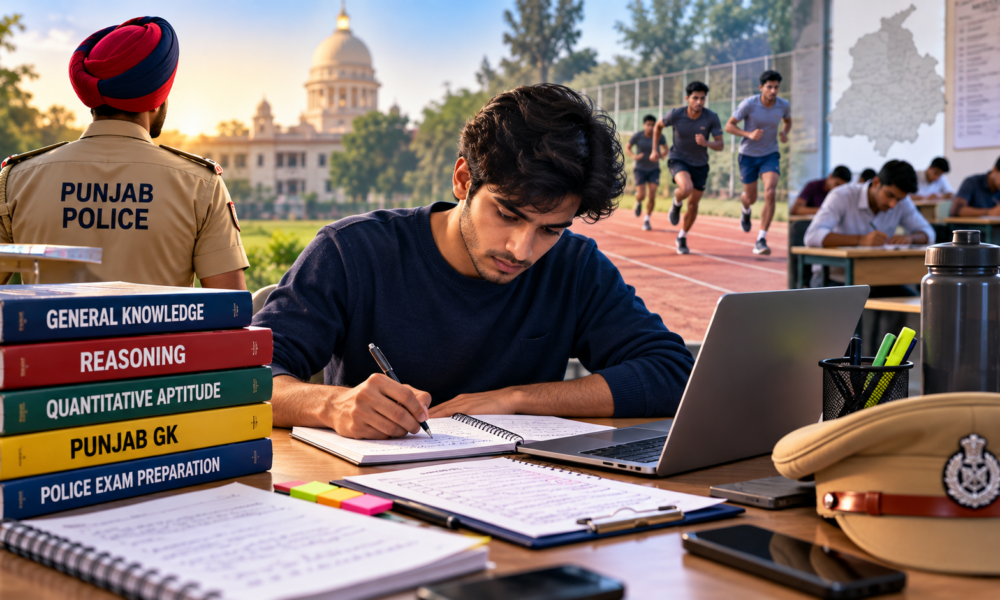
Preparing for the Punjab Police Constable examination requires more than simply studying for several hours every day. Candidates need a structured plan that combines written-test preparation, revision, practice questions and physical fitness.
The Punjab Police Constable recruitment process includes a Common Computer Based Test followed by physical screening and measurement requirements. The 2026 recruitment advertisement stated that merit is based on marks obtained in Paper I, along with normalization and cadre preference, subject to the available vacancies.
For candidates preparing for the examination, the first step should be understanding the examination structure. Instead of immediately starting with random books or online classes, aspirants should divide the syllabus into manageable sections and identify subjects in which they are strong or weak.
A practical preparation plan can begin with three daily study blocks. The first block can be used for learning new concepts, the second for solving questions and the third for revision. This approach prevents candidates from spending the entire day reading without testing whether they actually remember what they studied.
General knowledge and current affairs should be revised regularly rather than left for the final weeks. Candidates can maintain a short notebook or digital document containing important national, state and international developments. The material should be revised repeatedly because remembering information is more important than collecting large quantities of it.
Practice should also be a major part of preparation. Candidates can solve previous questions and mock tests under timed conditions. After each test, they should identify mistakes rather than simply checking their score. A wrong answer can reveal a knowledge gap, a calculation mistake, a misunderstanding of the question or poor time management.
Physical preparation should not be postponed until after the written examination. The recruitment process includes Physical Screening Test and Physical Measurement Test requirements. Candidates should therefore gradually develop running ability, stamina and general fitness while preparing academically.
A simple weekly routine could include five days of focused academic preparation, one day for a full mock test and one lighter day for revision and recovery. Physical training can be scheduled separately according to the candidate’s fitness level.
Candidates should also avoid changing study materials constantly. Selecting one reliable set of resources and revising it several times is generally more useful than collecting dozens of books, videos and PDFs.
The final month should focus increasingly on revision and mock tests. New topics can still be studied where necessary, but candidates should spend more time improving accuracy, speed and recall.
Most importantly, preparation should be consistent. Studying for ten hours one day and then doing almost nothing for the next two days creates an unstable routine. A smaller but sustainable daily schedule can produce better results over several months.
For Punjab Police aspirants, the goal should therefore be simple: understand the exam, divide the syllabus, practise regularly, revise repeatedly and prepare physically alongside academic studies.






No Comment! Be the first one.