








Uttar Pradesh Approves Research Chairs to Bring Indian Knowledge into Higher Education
The Uttar Pradesh government has approved a new research initiative aimed at bringing Indian knowledge traditions into higher education through dedicated research chairs at universities and colleges....

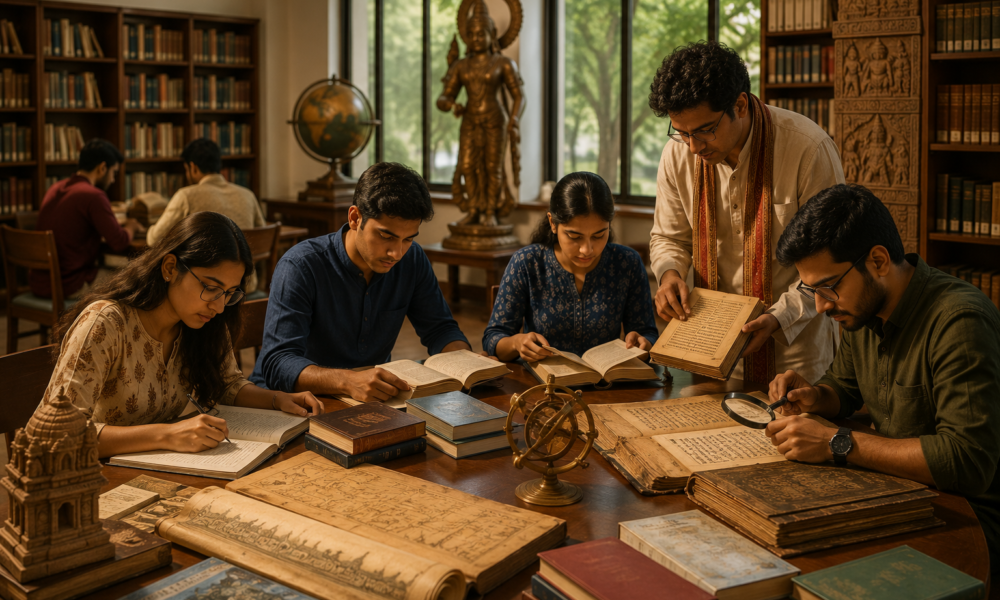
The Uttar Pradesh government has approved a new research initiative aimed at bringing Indian knowledge traditions into higher education through dedicated research chairs at universities and colleges.
The state Cabinet approved the Indian Knowledge Tradition Promotion Research Chair scheme in July, with the aim of encouraging research, documentation and wider study of India’s intellectual, scientific, philosophical and cultural heritage. The initiative is aligned with the National Education Policy (NEP) 2020, which promotes the study of Indian Knowledge Systems within education.
Under the scheme, eligible state universities and colleges can establish research chairs named after eminent Indian thinkers, philosophers, scientists, scholars and other important figures. The programme is intended to give institutions a structured platform to study their contributions and examine the relevance of traditional knowledge in present-day education and society.
The scheme will initially focus on institutions that are at least 50 years old and have more than 5,000 students. The Uttar Pradesh government has made a provision of ₹5 crore for the programme in the 2026-27 financial year. Universities can receive grants of up to ₹2 crore, while eligible aided colleges can receive up to ₹1 crore.
The funding structure is designed to support the research chairs over several years. According to the government’s plan, the grant can be kept as a fixed deposit, with the interest generated from it used to operate the chair and support its research activities. The chairs are expected to remain in place for five years.
The proposed research areas could cover a wide range of subjects. Examples cited by the government include the work of ancient scholars such as Aryabhata and Chanakya, as well as areas linked to the Vedas and other parts of India’s intellectual heritage. The stated objective is not only to preserve historical material but also to examine its scientific, philosophical and practical relevance.
For students and researchers, the initiative could create opportunities for deeper academic work in subjects that have often remained outside mainstream university research. Dedicated chairs could support archival work, academic papers, conferences, publications and interdisciplinary studies connecting historical knowledge with contemporary fields.
The policy also reflects a broader shift in Indian higher education towards giving greater institutional space to Indian Knowledge Systems. NEP 2020 has encouraged universities to incorporate Indian knowledge traditions, languages, culture and heritage into teaching and research. Uttar Pradesh’s research-chair model takes that objective a step further by providing dedicated funding and institutional positions for the subject.
However, the success of the initiative will depend on the academic quality of the research it produces. Universities will need qualified researchers, reliable historical sources and clear research standards to ensure that studies remain evidence-based and academically rigorous.
The scheme could also help connect traditional knowledge with modern disciplines. Research into ancient mathematics, astronomy, medicine, philosophy, languages and other areas could potentially involve historians, scientists, linguists and social scientists working together.
For higher education in Uttar Pradesh, the programme marks an attempt to make research into Indian knowledge traditions a more permanent part of university life. With dedicated chairs, funding and multi-year support, the state is seeking to move the subject from occasional academic discussion towards organised research.
The larger test will be whether these chairs produce high-quality scholarship that can stand up to academic scrutiny and contribute meaningfully to India’s understanding of its intellectual heritage.







No Comment! Be the first one.