








Telangana Gets ₹1,763.7 Crore for School Education Under Samagra Shiksha
The Union government has approved ₹1,763.7 crore for Telangana under the Samagra Shiksha scheme for the 2026-27 academic year, with the funding aimed at supporting school education and improving the...

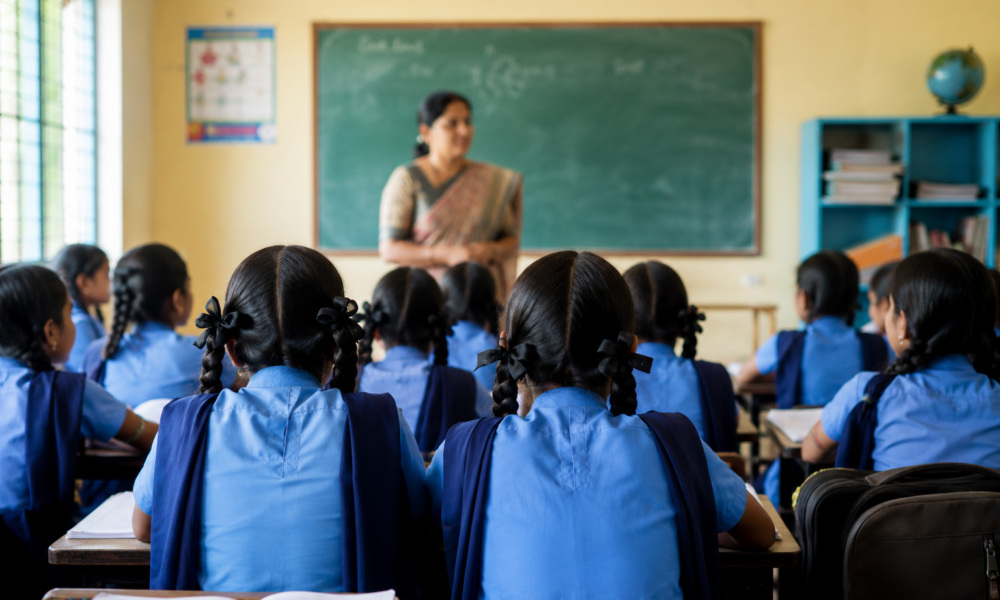
The Union government has approved ₹1,763.7 crore for Telangana under the Samagra Shiksha scheme for the 2026-27 academic year, with the funding aimed at supporting school education and improving the quality of learning across the state.
The allocation was approved by the Project Approval Board (PAB) of the Ministry of Education after reviewing Telangana’s implementation of the scheme. The Centre will contribute ₹960.4 crore, while the state government will provide ₹640.26 crore as its matching share.
The latest review also highlighted a major challenge for Telangana’s school education system: the growing gap between government and private schools. Government schools make up 69.7% of the state’s schools, with 30,057 institutions. However, they account for only 35.3% of total student enrolment, with 26.29 lakh students. Private schools, which account for 28.9% of schools, have 63.7% of students, or around 47.52 lakh learners.
A similar difference can be seen in the teaching workforce. Government schools employ 43.3% of teachers, or 1,54,956 teachers, while private schools account for 55.8%, with 1,99,734 teachers. The PAB has advised Telangana to study the reasons behind the lower enrolment in government schools and take steps to make them more attractive to families.
There has been some progress in staffing. The number of single-teacher schools fell from 5,720 in 2023-24 to 4,739 in 2024-25. However, the number of single-teacher government upper-primary schools increased from 80 to 93. The PAB has recommended better teacher deployment and adequate staffing so that schools can provide effective classroom teaching and other academic activities.
Telangana has also recorded positive results in some areas. The state reported zero dropout rates at the preparatory and middle stages, performing better than the national averages. However, the secondary-stage dropout rate increased from 8% in 2023-24 to 10.5% in 2024-25. This is above the national average of 8.2%, making secondary education a key area that needs attention.
Teacher education is another concern. Telangana has 14 District Institutes of Education and Training (DIETs), but only 135 of their 286 sanctioned posts are currently filled. This leaves 151 vacancies. The PAB has advised the state to fill these positions as a priority to strengthen teacher training and improve the effectiveness of educational institutions.
The ₹1,763.7 crore allocation therefore comes at a significant point for Telangana. While the funding can support school education, infrastructure and learning initiatives, the latest review shows that spending alone will not solve every problem. Improving enrolment in government schools, reducing secondary-stage dropouts and filling teacher vacancies will be equally important.
For students and parents, the bigger question is whether the additional investment translates into better classrooms, stronger teaching and greater confidence in government schools. The implementation of the 2026-27 plan will determine how far Telangana can turn the latest funding into measurable improvements in school education.






No Comment! Be the first one.