



Noida Schools Asked to Limit Smart Board Use to Protect Students’ Health
Schools across Noida and Greater Noida have been asked to reduce students’ daily exposure to smart and digital boards as the Gautam Buddh Nagar administration moves to promote healthier...

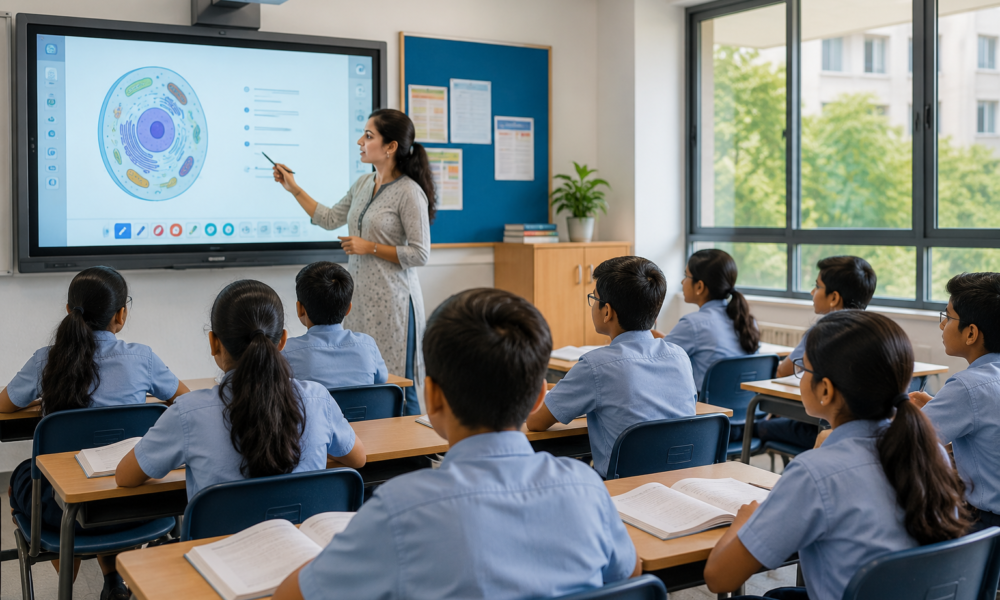
Schools across Noida and Greater Noida have been asked to reduce students’ daily exposure to smart and digital boards as the Gautam Buddh Nagar administration moves to promote healthier classroom habits. Under the new directions, screen use has been capped at 30 minutes per day for primary students and 60 minutes for upper-primary students. The instructions apply to government, aided and private schools across the district.
The decision follows complaints from parents who said children in some schools were spending four to five hours a day looking at smart and digital boards. Parents reported that screens were being used not only to explain lessons but also to display textbooks, conduct classwork, hold question-and-answer sessions and complete homework. The administration has said digital boards should support teaching rather than become the main method of classroom learning.
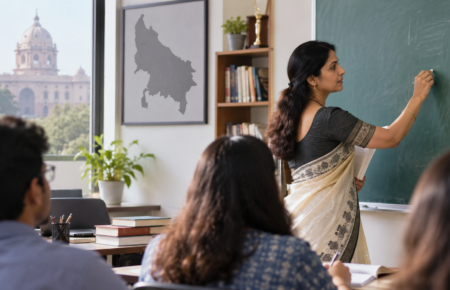
Under the new guidelines, smart boards should mainly be used when teachers need to explain difficult concepts or show useful pictures, videos and other learning material. Schools have also been asked to bring back regular blackboards, whiteboards and greenboards for writing exercises, practice work, discussions and other classroom activities.
The administration has raised concerns about the possible effects of excessive screen exposure on students. These include eye strain, headaches, dry eyes, short-sightedness and problems with concentration. The guidelines also stress that students need time for sports, reading, writing, group activities and other forms of learning that do not involve screens.
Schools have also been asked to follow the 20-20-20 rule during online classes. This means students should take a break after about 20 minutes of screen use and look at something around 20 feet away for 20 seconds. Schools have also been advised to maintain suitable screen brightness and classroom lighting and ensure students sit at a safe distance from digital displays.
Regular eye examinations have also been recommended. Schools have been asked to conduct eye tests every quarter and share relevant reports with parents. Parents should also be informed if students experience problems such as eye irritation, headaches or blurred vision.
The administration has further encouraged schools to introduce digital-free periods and activities that give children time away from screens. Reading, storytelling, outdoor games, exercise and group activities are among the alternatives being encouraged. School Management Committees have also been asked to discuss the balanced use of digital boards and student health with parents.
The move is significant for Noida and Greater Noida, where smart classrooms have become increasingly common. Digital tools can make lessons more engaging, but the latest guidelines underline the need to use technology in moderation. For schools, the focus now is on finding a balance between digital learning and traditional classroom methods.
For students and parents, the message is straightforward: technology can support education, but it should not replace healthy classroom routines, physical activity and direct interaction. The new rules could encourage schools across the district to rethink how and when digital screens are used during the school day.
No Comment! Be the first one.