








NEET-UG Could Move Towards Computer-Based Testing as India Reviews Its Exam Infrastructure
India is examining whether the National Eligibility cum Entrance Test for undergraduate medical admissions, or NEET-UG, could eventually move from its current pen-and-paper format to computer-based...

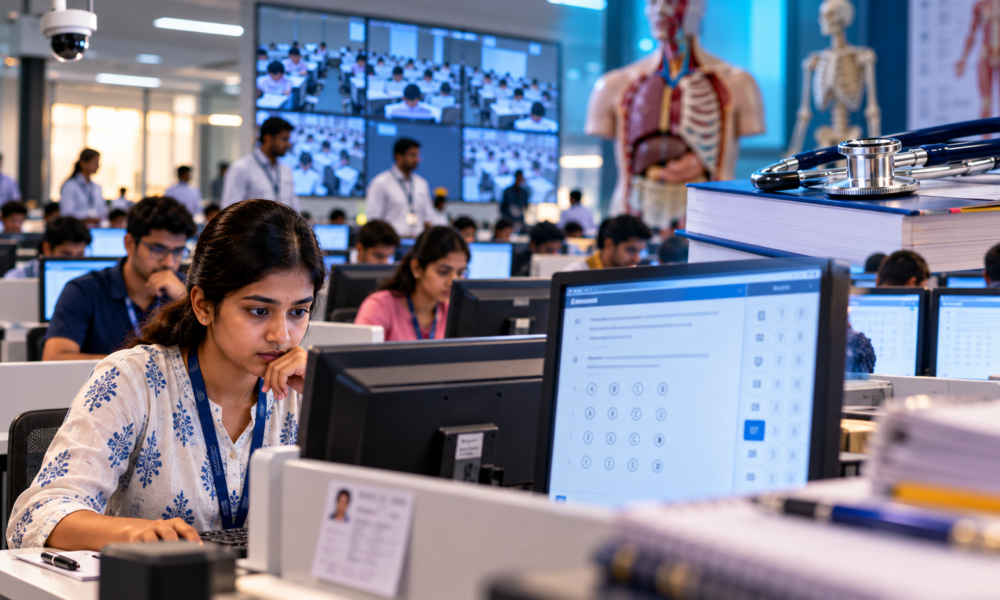
India is examining whether the National Eligibility cum Entrance Test for undergraduate medical admissions, or NEET-UG, could eventually move from its current pen-and-paper format to computer-based testing.
The proposal is part of a wider effort to strengthen India’s public examination system and build more robust testing infrastructure. Officials have indicated that a final decision on the mode of future NEET examinations will depend on recommendations from a high-level task force examining reforms to the country’s examination system.
The task force, led by Infosys co-founder Nandan Nilekani, is looking at ways to improve the security, reliability and technology infrastructure supporting major public examinations.
A computer-based NEET would represent a significant change because the examination involves a very large number of candidates across India. Moving such a high-volume examination online would require substantial infrastructure, including secure computer centres, reliable connectivity, identity verification, question delivery systems and contingency arrangements.
The proposal also reflects a broader shift in India’s examination ecosystem.
The National Testing Agency already conducts several major examinations using computer-based systems. However, NEET-UG has traditionally been conducted using an offline format because of its enormous scale and the need to provide examination access across different regions.
For students, the change could eventually alter the examination experience.
A computer-based examination would require candidates to read questions and enter answers on a screen rather than using an OMR sheet. It could potentially reduce some manual processes associated with paper-based examinations, but it would also create new requirements around digital familiarity and examination-centre infrastructure.
The move is not yet a confirmed change for NEET-UG 2027.
That distinction is important because students preparing for the next medical entrance examination should continue to follow official NTA announcements rather than assume that the examination mode has already changed.
The debate also raises a larger question about India’s examination infrastructure.
Major entrance examinations increasingly depend on secure digital systems, large-scale data management and standardised processes. As the number of candidates grows, technology is becoming an increasingly important part of how India conducts high-stakes examinations.
The possible NEET transition therefore goes beyond a change from paper to computers.
It could become part of a larger redesign of India’s public examination infrastructure, provided the required technology, security and accessibility systems are developed at sufficient scale.






No Comment! Be the first one.