








National AI Literacy Mission Aims to Prepare Over Two Crore Students for the Future
India has launched an ambitious nationwide initiative to introduce structured artificial intelligence education in schools, with the goal of training more than two crore students over the next three...
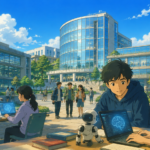

India has launched an ambitious nationwide initiative to introduce structured artificial intelligence education in schools, with the goal of training more than two crore students over the next three years. The Humain AI Literacy Mission (HAILM) seeks to equip children with practical AI skills while placing equal emphasis on ethics, critical thinking and responsible technology use.
The mission has already attracted participation from 750 schools and is designed to complement the vision of the National Education Policy (NEP) 2020. Unlike traditional computer education, HAILM focuses on helping students understand how artificial intelligence works, where it can be applied and how to use it safely in everyday life.
The programme offers age-appropriate learning pathways for students from Classes 3 to 12. Younger learners will be introduced to basic concepts through visual coding tools such as Scratch and Blockly, while older students will gradually explore advanced topics including large language models, natural language processing, retrieval augmented generation and AI agents.
One of the mission’s defining features is that it extends beyond students. Teachers, school leaders and principals will receive dedicated training to help them integrate AI into classroom teaching and school administration. Organisers believe that successful adoption depends as much on educator readiness as student engagement.
The curriculum has also been designed to remain board-agnostic, allowing schools affiliated with different education boards to participate. Initially available in English and Hindi through a mobile-based learning management system, the programme provides interactive lessons, live sessions, classroom resources and digital activities. The foundation course will be free for schools, while advanced modules will be offered at subsidised rates.
Developers of the initiative stress that AI education should never encourage blind dependence on technology. Around one-third of the programme focuses on ethics, responsible AI, digital citizenship and human values. Students will learn not only how to use AI tools effectively but also when human judgement, creativity and empathy remain essential.
The mission also plans to introduce an AI Olympiad where students will solve real-world challenges using artificial intelligence. Outstanding participants and educators will later compete at a national grand finale in New Delhi, encouraging innovation and practical problem solving rather than memorisation.
Education experts say AI literacy is rapidly becoming as important as digital literacy. As artificial intelligence transforms industries ranging from healthcare and finance to manufacturing and media, early exposure can help students develop future-ready skills while understanding the technology’s limitations and risks.
The initiative arrives at a time when schools across India are increasingly integrating artificial intelligence into classrooms. Recent curriculum reforms by CBSE and NCERT have already introduced computational thinking and AI concepts into school education, reflecting a broader shift towards preparing learners for technology-driven careers.
If implemented successfully, HAILM could become one of India’s largest AI education programmes, giving millions of students the knowledge and confidence to thrive in an increasingly digital economy while promoting responsible and ethical use of emerging technologies.





No Comment! Be the first one.