








Goa Board and SCERT to Jointly Develop New Textbooks for Classes 9–12 Under NEP 2020
The Goa Board of Secondary and Higher Secondary Education (GBSHSE) has partnered with the State Council of Educational Research and Training (SCERT) to jointly develop new textbooks for Classes 9 to...

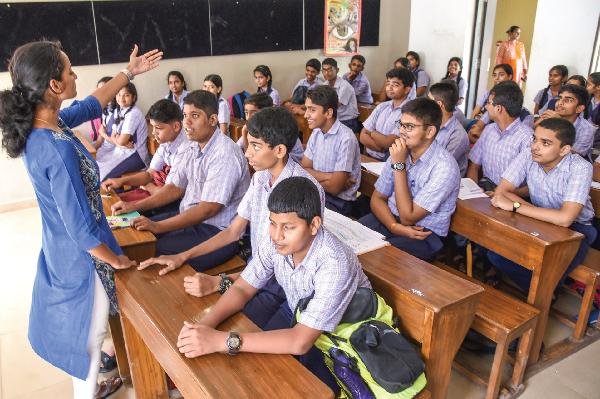
The Goa Board of Secondary and Higher Secondary Education (GBSHSE) has partnered with the State Council of Educational Research and Training (SCERT) to jointly develop new textbooks for Classes 9 to 12, marking the first such collaboration between the two institutions. The initiative aims to align school textbooks with the objectives of the National Education Policy (NEP) 2020 while modernising curriculum content for secondary and higher secondary students.
Under the revised framework, the Goa Board and SCERT will jointly prepare Konkani and Marathi textbooks, replacing the earlier system where subject-specific Boards of Studies independently developed learning materials. The collaborative approach is expected to improve curriculum planning, maintain academic consistency and ensure that textbooks reflect the competency-based learning model promoted under NEP 2020.
Education officials believe the partnership will strengthen curriculum quality by combining the academic expertise of the Goa Board with SCERT’s experience in curriculum design, teacher training and educational research. The revised textbooks are expected to incorporate activity-based learning, critical thinking and skill-oriented content to enhance students’ classroom experience.
Experts say curriculum reforms play an important role in improving learning outcomes by ensuring textbooks remain relevant to changing educational needs. Integrating multidisciplinary concepts, experiential learning and regional language development can help students build stronger conceptual understanding while preparing them for higher education and future careers.
The initiative also supports NEP 2020’s emphasis on promoting mother-tongue and regional-language education alongside competency-based assessment and flexible learning. Updated textbooks are expected to provide students with more engaging content while helping teachers adopt modern teaching methodologies.
Educationists have welcomed the move, noting that collaboration between curriculum development agencies can improve the quality, consistency and relevance of school education. Regular textbook revisions also ensure that students receive updated knowledge aligned with national educational standards and emerging learning practices.
The Goa Board-SCERT partnership represents a significant step towards modernising school education in the state. By jointly developing textbooks under the NEP framework, the initiative aims to provide students with high-quality learning resources that support holistic development and improved academic outcomes.





No Comment! Be the first one.