








NCERT Conducts Five-Day NISHTHA Training for Delhi Teachers to Strengthen NEP 2020 Implementation
The National Council of Educational Research and Training (NCERT), in collaboration with the State Council of Educational Research and Training (SCERT), Delhi, has conducted a five-day teacher...

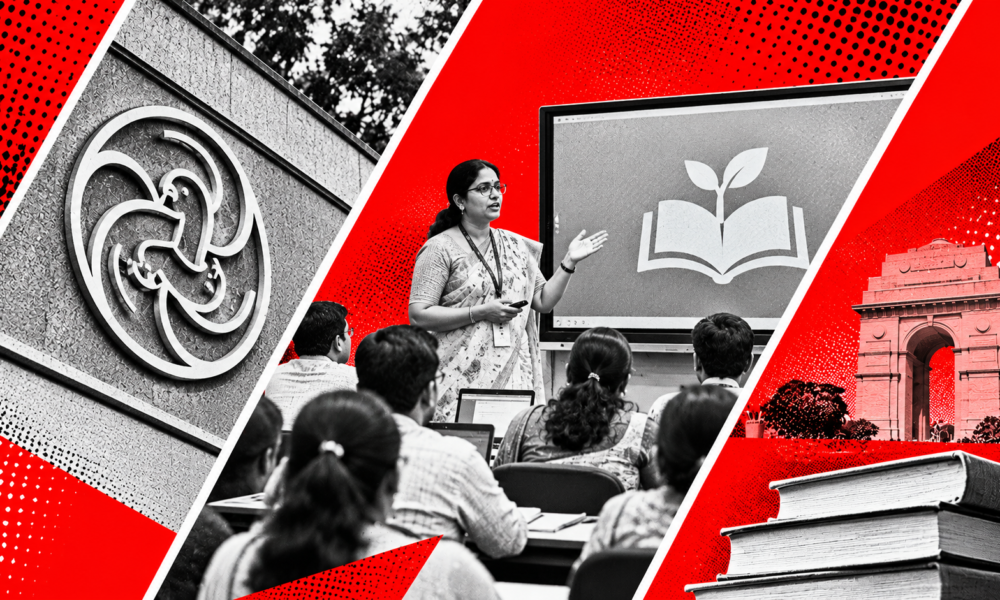
The National Council of Educational Research and Training (NCERT), in collaboration with the State Council of Educational Research and Training (SCERT), Delhi, has conducted a five-day teacher training programme under the Reimagined NISHTHA initiative.
Held from November 2 to 6, 2026, the programme aimed to prepare teachers for the curricular and classroom changes introduced under the National Education Policy (NEP) 2020.
The training programme was organised at Shaheed Hemu Kalani Sarvodaya Bal Vidyalaya in Lajpat Nagar, New Delhi, under the Samagra Shiksha scheme.
The initiative focused on strengthening teaching practices across the foundational, preparatory and middle stages of school education.
What Was Covered in the NISHTHA Training?
The training programme focused on helping teachers understand the National Education Policy and the National Curriculum Frameworks.
Participants were introduced to newly developed NCERT textbooks and different methods of improving classroom learning.
Some of the key areas covered included:
Child-centred teaching methods.
Digital education and classroom technology.
Inclusive education and student well-being.
School culture and educational leadership.
Subject-specific and stage-specific teaching methods.
Student assessment and the Holistic Progress Card.
The programme also included group activities, presentations and practical exercises.
Teachers were encouraged to prepare classroom action plans to apply the knowledge gained during the training.
Why Is the Holistic Progress Card Important?
One of the important components of the programme was the Holistic Progress Card (HPC).
Traditional examinations often measure student performance through marks and grades. However, the broader approach promoted through the Holistic Progress Card aims to understand different aspects of a student’s development.
This includes academic progress, participation, skills and other learning-related abilities.
The idea is to help teachers and parents understand how students are developing instead of depending only on examination scores.
Such assessment methods can encourage a more complete understanding of student performance.
How Does This Connect With NEP 2020?
The National Education Policy 2020 aims to move Indian education away from excessive dependence on memorisation.
It promotes critical thinking, practical learning, flexibility and better classroom participation.
However, implementing these changes requires more than introducing new textbooks or changing the curriculum.
Teachers must understand the new methods and receive proper training to use them effectively.
This is where initiatives such as NISHTHA become important.
A teacher who understands inclusive education, classroom assessment and child-centred learning can help translate policy objectives into actual classroom improvements.
What Happens Next?
The programme concluded with a valedictory session, where NCERT officials emphasised the need to take the Reimagined NISHTHA initiative forward through mission-mode implementation.
The training also included feedback and discussions on future classroom interventions.
The larger challenge is to ensure that teacher training reaches schools across different regions and is followed by meaningful improvements in teaching practices.
India’s education reforms will ultimately be judged not by the number of policies announced, but by what students experience inside classrooms.
For NEP 2020 to achieve its goals, teachers must remain at the centre of the transformation.



No Comment! Be the first one.