








UK’s First ‘Super University’ Set to Launch as Higher Education Faces Financial Pressure
The United Kingdom is preparing to launch its first “super university” after the Universities of Greenwich and Kent agreed to merge under a new organisation called the London and South...

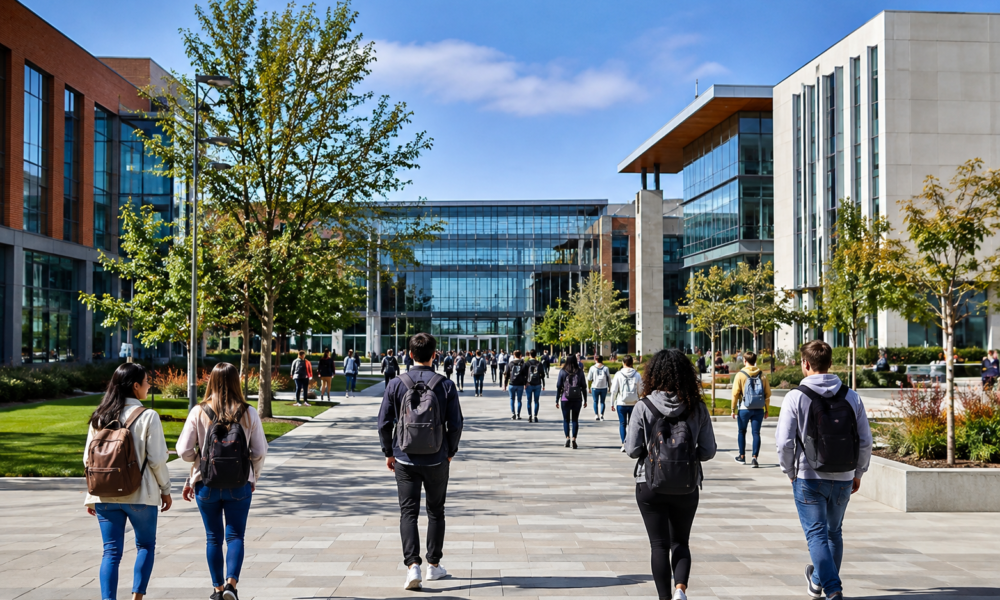
The United Kingdom is preparing to launch its first “super university” after the Universities of Greenwich and Kent agreed to merge under a new organisation called the London and South East University Group (LASE). The new group will officially begin operating in September and will become one of the largest higher education institutions in the country, serving more than 50,000 students across four campuses.
Although the universities will come together under one administrative body, both institutions will continue to keep their individual identities. Students will still study at either the University of Greenwich or the University of Kent and will graduate with degrees from their chosen university. The merger is designed to improve financial stability while allowing each university to preserve its academic traditions.
The move comes at a challenging time for the UK’s higher education sector. Many universities have reported financial difficulties because of rising operating costs, declining numbers of international students and increasing pressure on budgets. The Office for Students has previously warned that some institutions could face serious financial risks if these challenges continue.
Education leaders believe larger university groups could provide a solution. By sharing services such as finance, technology, student support and administration, universities may reduce costs while continuing to invest in teaching, research and campus facilities. Instead of competing for limited resources, institutions could benefit from working together on major academic projects and industry partnerships.
The UK government has welcomed the new partnership, describing it as an example of how universities can strengthen their long term future. Officials believe the combined group could support regional economic growth by improving research, innovation and skills development across London, Kent and Medway. Graduates are also expected to benefit from stronger links with employers and wider opportunities for placements and collaborative research.
For students, the day to day experience is expected to remain largely unchanged. Courses, campuses and university branding will continue as before, while behind the scenes the institutions will share resources and strategic planning. This approach aims to improve financial efficiency without affecting the quality of education or student life.
Experts say the merger may encourage other universities to explore similar partnerships if financial pressures continue. Rather than closing campuses or reducing academic programmes, collaboration could help institutions remain competitive in an increasingly global education market. Similar discussions are already taking place elsewhere in the UK as universities look for sustainable ways to manage rising costs.
The development also reflects changing expectations from students and employers. Modern universities are expected to offer flexible learning, industry connections, advanced research and international opportunities while maintaining affordable education. Larger university groups may have greater capacity to meet these demands through shared expertise and investment.
As the London and South East University Group prepares to open its doors, education leaders across the UK will closely watch its progress. If successful, the model could influence how universities adapt to financial challenges while continuing to deliver high quality teaching, research and student support in the years ahead.






No Comment! Be the first one.