








JEE Main 2026 Paper 2 Provisional Answer Key Out; Candidates Get Opportunity to Raise Objections
The National Testing Agency has released the provisional answer key and individual response sheets for JEE Main 2026 Paper 2, conducted during the January session. Candidates who appeared for the...

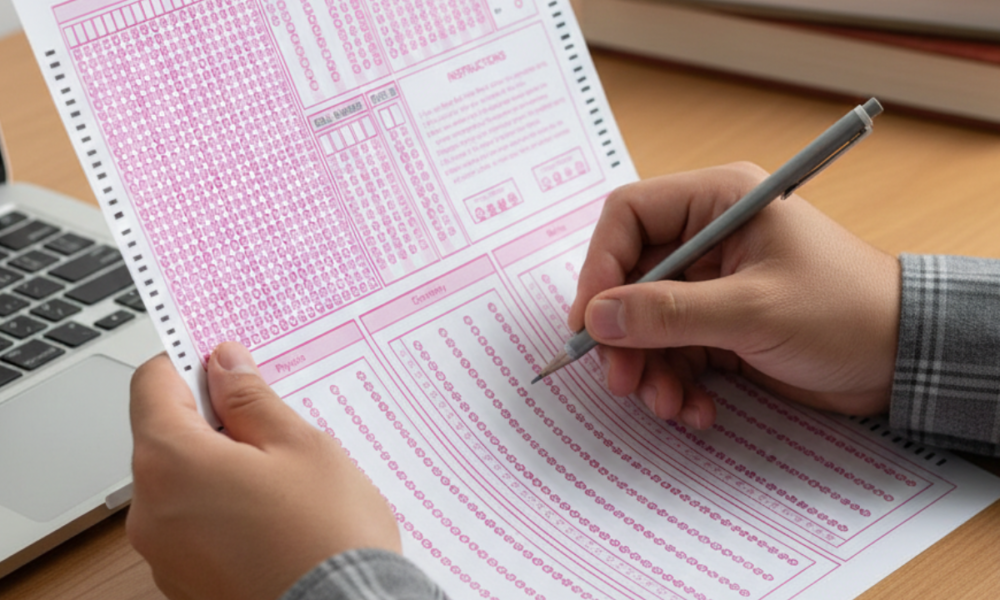
The National Testing Agency has released the provisional answer key and individual response sheets for JEE Main 2026 Paper 2, conducted during the January session. Candidates who appeared for the entrance examination for BArch and BPlanning programmes can now review their recorded responses and compare them with the officially published answers.
The move allows students to assess their expected scores ahead of the final result declaration. It also opens a formal window for candidates to challenge any answer they believe to be incorrect.
JEE Main Paper 2 is specifically designed for aspirants seeking admission to architecture and planning courses offered by National Institutes of Technology, Schools of Planning and Architecture, and other participating institutions. The examination tests candidates on mathematics, aptitude, and drawing or planning based components depending on the course selected.
To access the provisional answer key, candidates must log in to the official portal using their application number and password or date of birth. Once logged in, they can download both the answer key and their recorded response sheet. The response sheet displays the answers marked during the examination, providing clarity on how the system captured each response.
By comparing their answers with the provisional key, students can calculate a tentative score using the prescribed marking scheme. For multiple choice questions, four marks are awarded for each correct answer, while one mark is deducted for every incorrect response. Questions left unanswered do not attract any penalty. This structured marking pattern helps candidates estimate their performance with reasonable accuracy.
For BArch candidates, the drawing test is evaluated separately according to established guidelines. The drawing component is conducted in pen and paper mode, even though the rest of the examination is computer based. Evaluators assess this section based on parameters such as creativity, spatial understanding, and visual representation skills. In BPlanning, the planning related section is assessed according to subject specific criteria outlined in the official information bulletin.
Along with the release of the provisional answer key, the testing agency has provided a defined period during which candidates may raise objections. Challenges must be submitted online within the specified deadline. Each objection requires payment of a fixed fee per question. The fee must be paid through the available online payment options and is non refundable.
Candidates are advised to support their objections with credible academic references or documentary evidence. This strengthens the case and assists the expert panel in reviewing the claim effectively. After the objection window closes, all representations will be examined by subject experts. The panel will verify the accuracy of the challenged answers based on standard textbooks and authoritative sources.
If any objection is found to be valid, the provisional answer key will be revised accordingly. The final answer key will then be prepared and published. The results of JEE Main 2026 Paper 2 will be compiled based on this revised key. Once the final key is issued, no further objections will be entertained.
The release of response sheets and provisional keys reflects an established practice aimed at maintaining transparency in national level entrance examinations. By allowing candidates to review their own recorded answers, the examination authority ensures accountability and reduces uncertainty surrounding the evaluation process.
The January 2026 session of JEE Main Paper 2 was conducted at multiple centres across India and select international locations. The examination was held in computer based mode for mathematics and aptitude sections, while the drawing test for BArch candidates was conducted offline. Strict guidelines were followed at examination centres to ensure smooth conduct.
JEE Main is conducted under the supervision of the Ministry of Education and serves as a gateway to undergraduate technical education in the country. For architecture and planning aspirants, Paper 2 plays a crucial role in securing admission to reputed institutions.
Once the final answer key is published and results are declared, candidates will be able to download their scorecards from the official website. The scorecard will include subject wise marks, total percentile score, and qualifying status. These scores will be used for admission and counselling processes conducted by the respective authorities.
Qualified candidates will proceed to the counselling and seat allocation stage, where they can register their preferences for institutions and courses. Admission will be granted based on merit, availability of seats, and eligibility criteria set by participating institutes.
Students are advised to regularly check official announcements to stay updated on deadlines and further procedures. Missing the objection deadline or failing to complete required formalities may result in loss of opportunity to raise valid concerns.
The provisional answer key stage is an important checkpoint in the examination cycle. It provides clarity to candidates regarding their performance and offers a fair chance to rectify any potential discrepancies before the results are finalized.
As the review process progresses, candidates across the country await the release of the final answer key and subsequent result declaration. The completion of this stage will mark the transition to the admission and counselling phase for architecture and planning programmes in the academic year 2026.
With thousands of aspirants competing for limited seats in premier institutions, every mark carries significance. The transparent objection process aims to ensure that evaluation remains accurate and consistent for all candidates.
Students are encouraged to carefully examine their response sheets, calculate their estimated scores, and submit objections only if they are supported by valid academic reasoning. The final outcome will depend on the expert review and the revised answer key issued by the examination authority.
The publication of the provisional key sets the stage for the next phase in the JEE Main 2026 journey, bringing candidates one step closer to securing admission in their desired architecture or planning programme.








No Comment! Be the first one.