





CBSE Updates Class 9 Study Plan: Vocational Education Becomes a Compulsory Subject
The Central Board of Secondary Education (CBSE) has issued an important update for students studying in Class 9 during the 2026–27 academic session. The new clarification focuses on vocational...

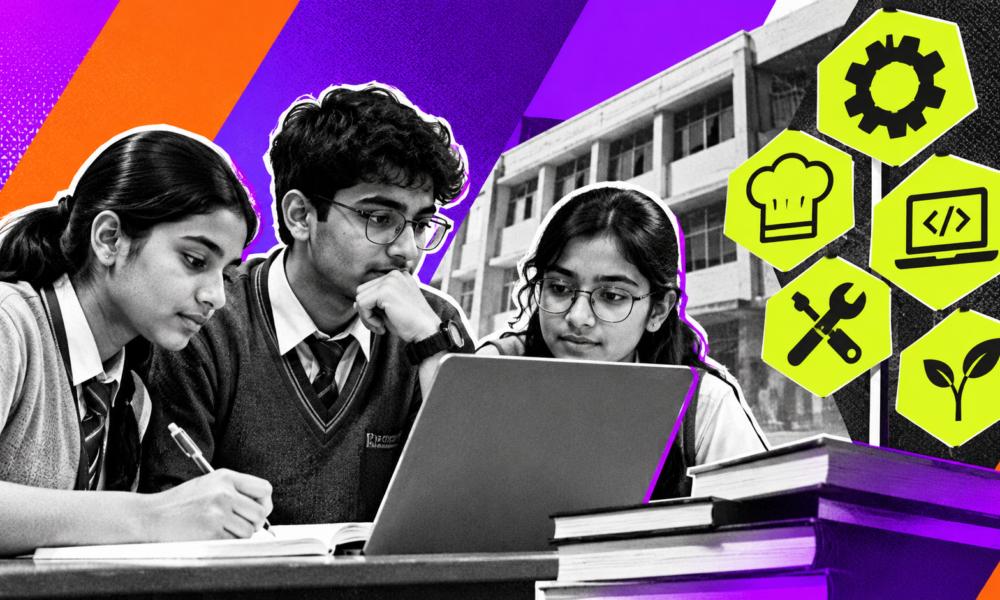
The Central Board of Secondary Education (CBSE) has issued an important update for students studying in Class 9 during the 2026–27 academic session.
The new clarification focuses on vocational education, also known as skill education.
According to the board, vocational education will remain a compulsory part of the curriculum for students currently studying in Class 9 and progressing to Class 10 in the 2027–28 academic session.
Students will have a choice between different skill-based subjects and a programme called Kaushal Vikas.
The update is important because it gives students more opportunities to learn practical skills along with their regular academic subjects.
What is vocational education?
Vocational education focuses on skills that can be used in real-life situations and workplaces.
Traditional school subjects often focus on classroom learning, theory and examinations.
Vocational education adds another part to the learning process. It helps students understand how different industries and professions work.
For example, a student interested in technology may choose Information Technology, Artificial Intelligence or Data Science.
A student interested in business may explore Marketing and Sales, Retail or Introduction to Financial Markets.
These subjects can help students understand different career areas at an early stage.
Which subjects can students choose?
CBSE has listed 23 options under its vocational education curriculum.
Students can choose one of 22 skill subjects or select Kaushal Vikas.
Some of the available skill subjects include:
- Information Technology
- Artificial Intelligence
- Data Science
- Retail
- Introduction to Tourism
- Agriculture
- Banking and Insurance
- Marketing and Sales
- Healthcare
- Beauty and Wellness
- Electronics and Hardware
- Design Thinking and Innovation
The list also includes subjects such as Automotive, Food Production, Apparel and Multimedia.
The main idea is to give students opportunities to explore skills beyond conventional academic subjects.
However, students should check which options are actually available at their schools before making a choice.
Will these subjects be part of board examinations?
This is one of the most important points in the CBSE clarification.
Students choosing one of the 22 skill subjects will have to appear for the relevant Class 10 board examination in the 2027–28 session.
Students choosing Kaushal Vikas will be assessed through school-based internal assessment.
This means both options are part of compulsory vocational education, but their assessment methods are different.
Students and parents should understand this difference before selecting an option.
Which subjects will have Class 10 board examinations?
According to the clarification, five main subjects will have board examinations.
These are:
- Language R1
- Language R2
- Mathematics
- Science
- Social Science
In addition, examinations will apply to certain optional subjects and selected skill subjects, depending on the student’s choices.
The board has also clarified that some subjects, including Language R3, Art Education and Physical Education and Well-being, will have school-based internal assessment.
Why is this change important?
The job market is changing.
Companies are increasingly looking for people who understand technology, communication, business operations and practical problem-solving.
Students who get opportunities to explore different skills at school may develop a better understanding of their interests.
For example, an Artificial Intelligence course can introduce students to basic ideas about computer systems and modern technology.
A subject such as Marketing and Sales can help students understand how businesses communicate with customers.
Agriculture and healthcare subjects can also introduce students to important sectors of the Indian economy.
However, simply offering new subjects is not enough.
Schools will need trained teachers, proper learning material and practical facilities to make vocational education useful.
What should students and parents do?
Students currently studying in Class 9 should discuss the available vocational subjects with their teachers.
Parents should also understand the difference between a subject with a board examination and Kaushal Vikas, which uses internal assessment.
The choice should depend on the student’s interests, school facilities and learning goals.
Students should not select a subject simply because it appears easier or more popular.
The larger goal of education
The CBSE update reflects the growing importance of practical learning in schools.
Education should not only prepare students to answer examination questions. It should also help them understand the world around them.
Introducing technology, business and other skill-based subjects at an early stage can help students explore future opportunities.
The success of this approach will depend on how well schools turn these subjects into meaningful learning experiences.


No Comment! Be the first one.