








Himachal Pradesh Reports 99.55% Literacy Rate as School Participation Expands
Himachal Pradesh has reported a literacy rate of 99.55% under the New India Literacy Programme, marking a significant transformation in the state’s education landscape. The figure represents a...

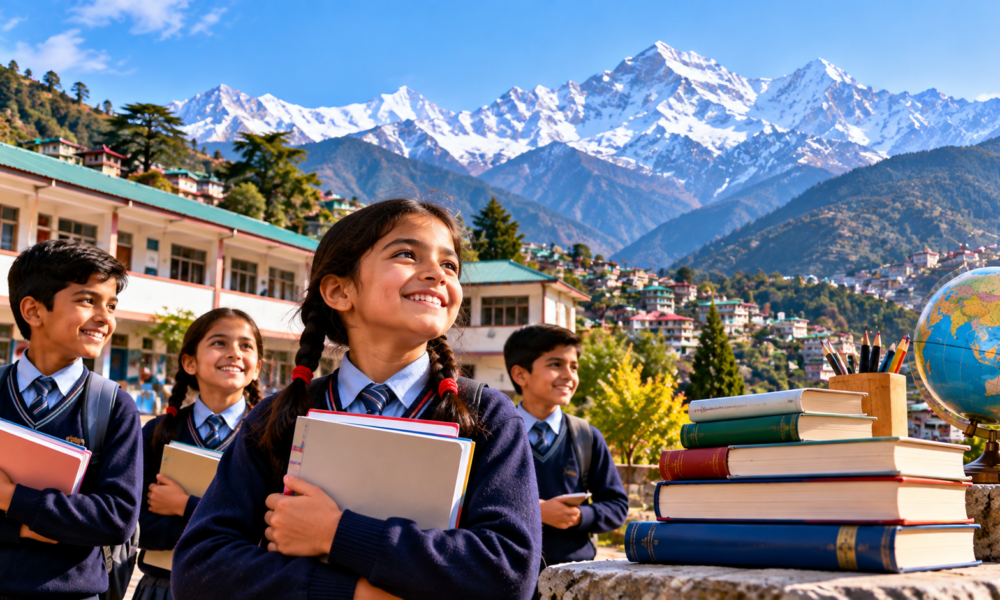
Himachal Pradesh has reported a literacy rate of 99.55% under the New India Literacy Programme, marking a significant transformation in the state’s education landscape.
The figure represents a dramatic increase from the literacy levels recorded around the time of India’s Independence.
The state’s education department has also reported near-universal school participation at several levels.
According to Education Times, Himachal Pradesh currently records a gross enrolment ratio of around 100% at the primary level and more than 100% at upper-primary and secondary levels. The higher-secondary gross enrolment ratio is around 85%.
The state has also reported extremely low dropout levels.
Primary-school dropout has been described as effectively zero, while dropout up to Class 8 is around 0.5%.
The figures highlight the relationship between literacy and access to formal schooling.
Literacy programmes alone cannot transform education outcomes without students having consistent access to schools, teachers, learning materials and supportive educational environments.
Himachal Pradesh’s experience demonstrates how expansion of formal schooling can contribute to long-term improvements in literacy.
The state has also received national recognition for its literacy performance under the New India Literacy Programme, also known as ULLAS.
The current focus is shifting from achieving high literacy to sustaining and strengthening educational outcomes.
The state is targeting 100% literacy during the 2026-27 period.
Achieving that goal will require continued attention to adult literacy, learning quality, digital literacy and access for communities that remain educationally vulnerable.
Literacy rates are also increasingly being viewed beyond the basic ability to read and write.
Modern education systems must prepare learners to understand information, use digital technologies, evaluate information critically and participate in the economy.
This makes the quality of education increasingly important alongside enrolment.
For schools, high enrolment rates can create their own challenges.
Maintaining adequate teacher availability, infrastructure and learning resources becomes critical when more students enter and remain within the education system.
Himachal Pradesh’s reported progress therefore provides a useful example of how education expansion can produce long-term social outcomes.
The next challenge is ensuring that high participation translates into strong learning outcomes and continued progression into higher secondary education, higher education and vocational pathways.
The state’s 2026-27 literacy target places renewed attention on the final stage of this long-term transformation.
For education policymakers, the experience also highlights the importance of combining access, retention and adult literacy initiatives rather than focusing on a single indicator.






No Comment! Be the first one.