








GST on Coaching Classes: What Students and Parents Should Know
Students and parents paying for coaching classes often focus on the course fee, but the final amount charged by a coaching provider can also depend on applicable Goods and Services Tax rules. The GST...

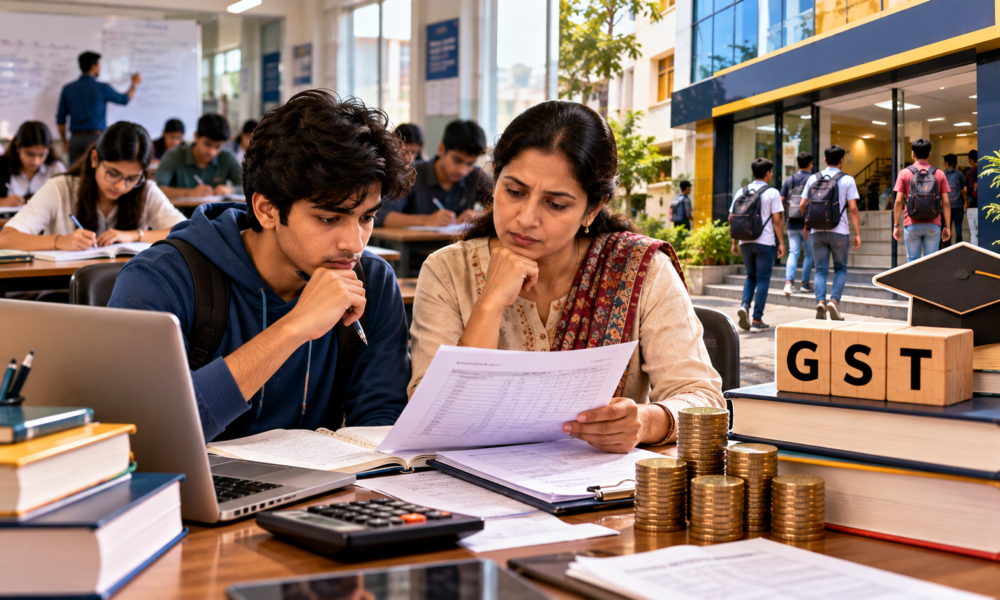
Students and parents paying for coaching classes often focus on the course fee, but the final amount charged by a coaching provider can also depend on applicable Goods and Services Tax rules.
The GST treatment of education services is not the same for every institution or course. Certain services provided by eligible educational institutions are exempt under the GST framework, while commercial training and coaching services generally attract GST.
A Lok Sabha document on GST-related education services states that commercial training and coaching services attract an 18% GST rate, while specified services provided by educational institutions and certain services connected with schools and government education remain exempt.
This distinction is important because a school or recognised educational institution and a private coaching centre may not receive the same GST treatment.
For families, the practical issue is the difference between the advertised course fee and the final amount payable. If a coaching provider’s service is taxable, GST can increase the total cost paid by the student.
For example, if a taxable coaching service has a base fee of ₹50,000, an 18% GST component would amount to ₹9,000, making the total ₹59,000. The actual tax treatment, however, depends on the nature of the service and the provider, so students should check the invoice and applicable terms rather than assuming that every education-related payment receives the same treatment.
Parents should also distinguish coaching from services that fall within specific education exemptions. The GST framework contains exemptions for certain services provided by educational institutions to students, faculty and staff, among other specified categories.
The rules have also changed in specific areas. For example, the GST Council recommended restoration of an exemption for certain skilling services provided by Training Partners approved by the National Skill Development Corporation, and the exemption was reinstated through a January 2025 notification with effect from January 16, 2025.
This shows why students should not rely on general statements such as “education is GST-free.” The tax treatment depends on what service is being provided, who is providing it and whether a particular exemption applies.
Before enrolling in a coaching programme, students and parents can ask the institute for a fee breakup. The invoice should clearly indicate the base fee, applicable GST and final amount payable.
It is also useful to compare the total cost of different institutes rather than comparing only their advertised headline fees. A course that appears cheaper initially may not remain cheaper after taxes, study material charges, test-series fees or other additional costs.
Students should retain invoices and payment records, particularly when paying significant amounts for long-term coaching programmes.
Ultimately, understanding GST does not require students to become tax experts. The key is to know whether the coaching service is taxable, how much tax is being charged and whether the final invoice matches the fee communicated by the institute.






No Comment! Be the first one.