



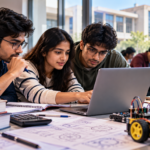




Skill-Based Education Expands Under NEP 2020 as Schools and Colleges Link Learning With Employability
India is expanding skill-based and experiential learning across school and higher education as part of the implementation of the National Education Policy 2020. Under Samagra Shiksha, skill education...
India is expanding skill-based and experiential learning across school and higher education as part of the implementation of the National Education Policy 2020.
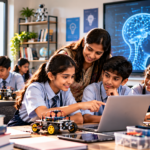
Under Samagra Shiksha, skill education has been integrated into school education as a regular component for students from Classes VI to XII.
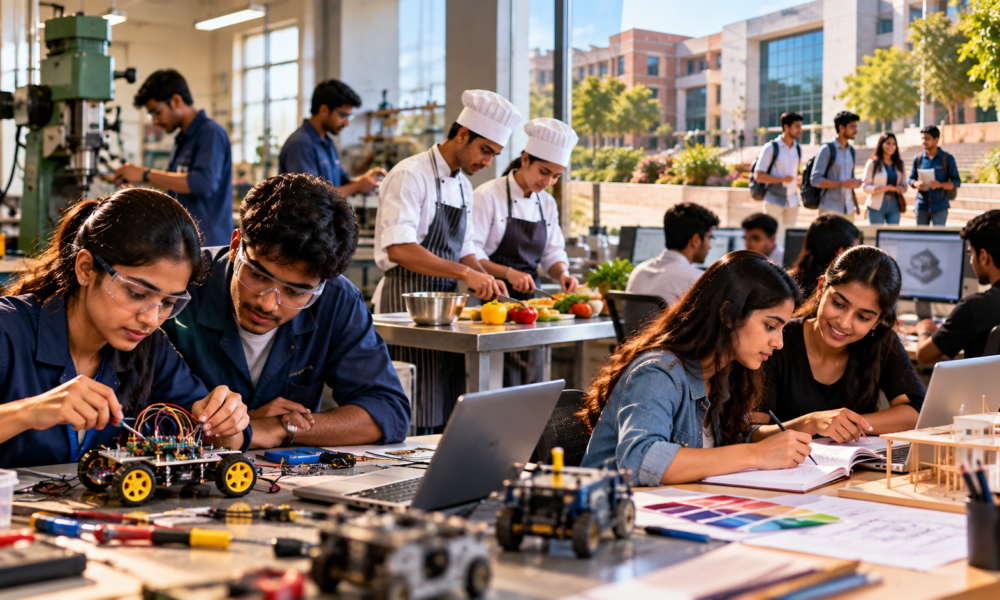
For younger students in Classes VI to VIII, the approach includes pre-vocational education, experiential learning and programmes designed to introduce students to practical skills.
Students in Classes IX to XII can take skill courses aligned with the National Skills Qualifications Framework.
The objective is to make education more connected to practical knowledge rather than relying entirely on textbook-based learning.
This approach is particularly important as employers increasingly seek skills alongside formal qualifications.
Students may need communication abilities, digital literacy, problem-solving skills and industry-specific knowledge in addition to academic knowledge.
The policy direction is also visible in higher education.
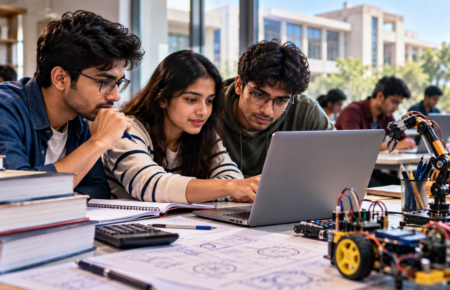
The government has highlighted Community Colleges, Bachelor of Vocation programmes and other skill-oriented pathways as part of the higher education ecosystem.
Universities are also being encouraged to work more closely with industry.
The Professor of Practice framework, for example, allows higher education institutions to involve experienced industry professionals in teaching and academic activities.
This can help bring workplace knowledge into classrooms.
Another important development is the expansion of flexible learning pathways.
SWAYAM allows students to access online courses, while the government has also launched SWAYAM Plus with an emphasis on upskilling and reskilling existing workers.
The Ministry of Education has said that up to 40% of credits in regular courses can be earned through SWAYAM under the relevant framework.
Together, these changes point towards a broader transformation in how education is structured.
Instead of treating education as a one-time phase before employment, the system is moving towards a model in which learning, skills and reskilling continue throughout a person’s career.
However, successful implementation depends on quality.
Skill courses need to be relevant to actual employment opportunities, while students need access to equipment, trained instructors and meaningful practical experiences.
There is also a need to ensure that skill education is not treated as a lower-status alternative to conventional academic education.
The effectiveness of that shift will ultimately depend on how well schools, colleges, universities and employers work together.

No Comment! Be the first one.