








India-Afghanistan Cricket: How Sports Academies Are Shaping Careers Beyond Traditional Education
The growing cricket relationship between India and Afghanistan offers an example of how sports can create educational and professional pathways beyond conventional classroom careers. India and...

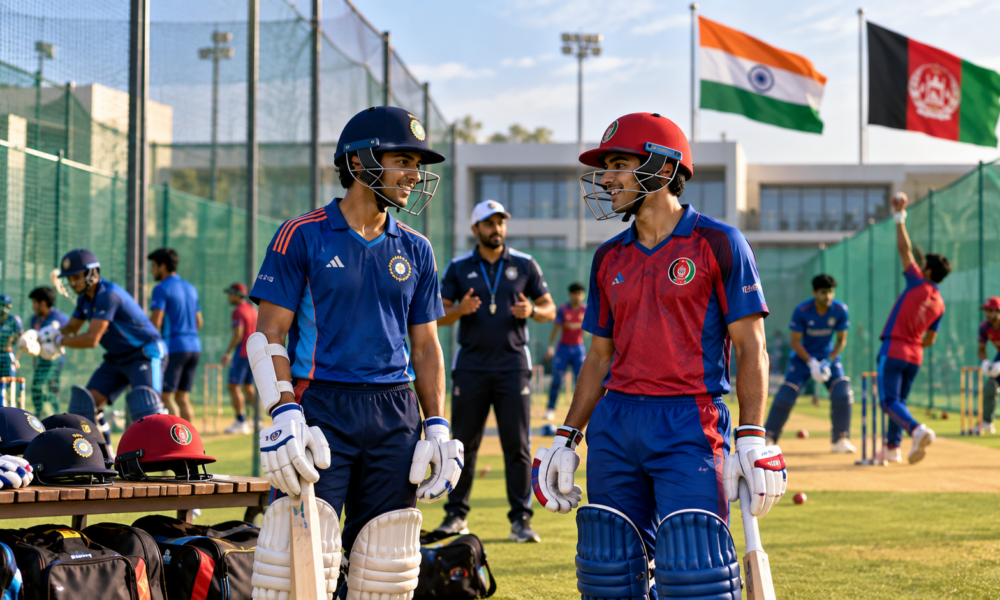
The growing cricket relationship between India and Afghanistan offers an example of how sports can create educational and professional pathways beyond conventional classroom careers.
India and Afghanistan have met across multiple formats in recent years, including a one-off Test and three ODIs in June 2026. India also hosted Afghanistan for a three-match T20I series in September. The September series was scheduled for September 13, 15 and 17 in New Delhi.
The international fixtures are only the visible part of a much larger development system.
Young cricketers generally progress through school and domestic cricket before reaching higher-level competitions. The pathway involves coaches, academies, age-group selections, fitness programmes, tournaments and increasingly specialised support.
The importance of structured talent development was highlighted by the BCCI’s Junior Cricket Committee process in August 2026. The committee is responsible for selecting age-group teams up to Under-22, scouting players and contributing to the development of India’s junior talent pool and bench strength.
This demonstrates that cricket development is not limited to senior international teams. A substantial ecosystem exists below the national level.
India’s 2026 Test squad against Afghanistan also included players who had built their careers through domestic cricket and India A pathways. ICC highlighted Gurnoor Brar, Manav Suthar and Harsh Dubey as uncapped players receiving opportunities after building strong domestic credentials.
For students, this creates an important educational lesson. A sporting career does not necessarily mean abandoning education.
Schools and colleges can allow young athletes to combine academic study with structured training. Flexible academic arrangements, attendance support, sports scholarships and university-level competitions can make this combination more practical.
Sports academies also create careers beyond playing.
Students interested in cricket can explore coaching, sports analytics, physiotherapy, sports nutrition, strength and conditioning, sports journalism, broadcasting, event management and sports administration.
Technology has further expanded the ecosystem. Video analysis, wearable technology, performance tracking and data analytics are increasingly relevant to athlete development.
The India-Afghanistan cricket relationship also demonstrates the international dimension of sports education. Young players can learn about different playing styles, cultures, training environments and professional standards through international competition.
For Afghanistan, international cricket provides an especially important pathway for developing young talent. The country’s participation in ICC age-group competitions and senior international cricket has created opportunities for players to progress through structured national systems. Afghanistan also featured prominently in the 2026 Under-19 World Cup, where its young players competed against leading cricket nations.
For Indian students, the broader message is that sports can become an organised career ecosystem rather than simply an extracurricular activity.
Education institutions can contribute by recognising sporting talent while continuing to provide academic foundations.
The future of sports education therefore lies not only in producing elite players but also in preparing students for the many professional careers that exist around modern sport.



No Comment! Be the first one.