








HPE Expands Academic Alliance to 176 Indian Universities, Reaching 18,000 Students
Higher education in India is moving closer to the technology industry as @HPE expands its Academic Alliance Programme to 176 colleges and universities across the country. The programme has reached...

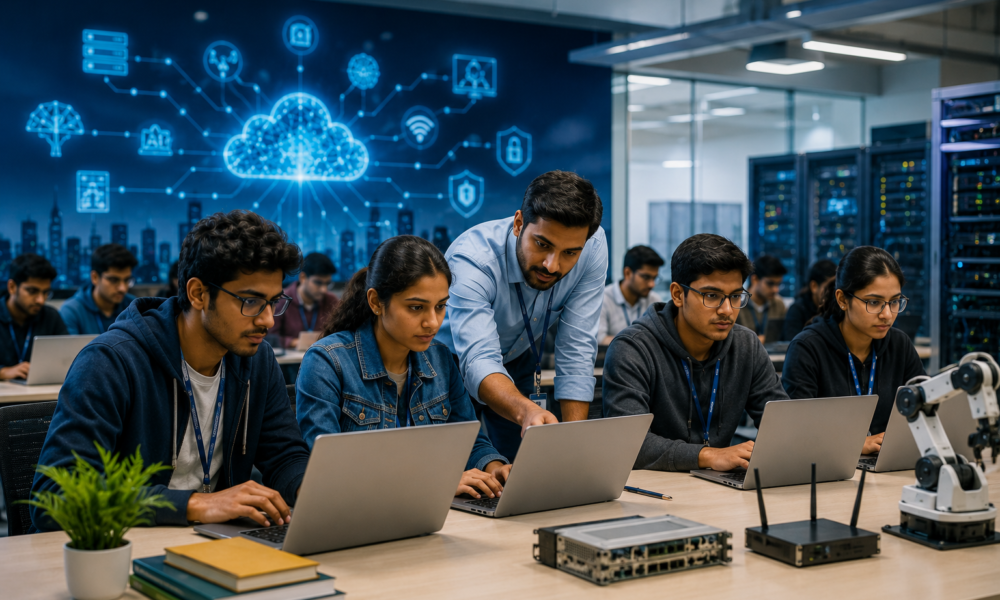
Higher education in India is moving closer to the technology industry as @HPE expands its Academic Alliance Programme to 176 colleges and universities across the country. The programme has reached more than 18,000 student beneficiaries in 2026, with a focus on skills in artificial intelligence, networking, cloud computing, security and automated operations.
The initiative comes as Indian universities face growing pressure to prepare students for jobs that require skills beyond traditional academic learning. HPE says its programme is designed to help reduce the gap between what students learn in classrooms and the skills expected by technology companies.
Under the programme, students and faculty members receive access to online learning platforms and cloud-based virtual laboratories. Students can use these resources for hands-on learning and gain exposure to real-world technology environments. The programme also provides access to HPE’s global certification courses at discounted rates.
The training covers several areas that are becoming increasingly important in the technology industry. These include AI-native networking, cloud computing, cybersecurity, DevOps and HPE’s Mist AI technology. The programme is aimed at giving students practical knowledge that can complement their existing engineering and technology courses.
HPE is also supporting universities in setting up AI-native Networking Centres of Excellence. These centres are intended to provide dedicated infrastructure for students to learn about modern networking and related technologies. The company is also conducting bootcamps and technical sessions led by its experts.
Several institutions are already part of the programme, including @NIT Surathkal, University Visvesvaraya College of Engineering, Government Engineering College Hassan, @RV College of Engineering and @BMS College of Engineering. HPE says these institutions are integrating specialised curriculum into engineering programmes to give students greater exposure to industry requirements.
The development points to a wider change in higher education. Universities are increasingly working with technology companies to update courses and give students direct exposure to tools and skills used in the workplace. Instead of relying only on traditional classroom teaching, students are being given access to virtual labs, industry certifications, technical bootcamps and practical projects.
This is particularly important in fields such as AI, cloud computing and cybersecurity, where technology changes quickly. A university curriculum can take time to change, while industry requirements can shift much faster. Partnerships between universities and technology companies can help institutions respond more quickly to these changes.
For students, the biggest benefit is the opportunity to gain practical technology skills alongside their degrees. This could help engineering and technology graduates build stronger portfolios and improve their understanding of how enterprise technology is used.
For universities, such partnerships can also support faculty development and curriculum modernisation. HPE says its programme has three main areas of focus: empowering students, building an industry-aligned workforce and supporting faculty development.
The programme also reflects the growing importance of industry-academia collaboration in India’s education system. As AI and digital infrastructure become more important to businesses, employers will need graduates who understand both academic concepts and practical applications.
The bigger XEducation trend is clear: Indian higher education is moving from degree-focused learning towards industry-linked, practical and technology-focused education.
For students, this means the value of a degree could increasingly depend not only on what they study, but also on the practical skills, certifications and experience they build alongside it.





No Comment! Be the first one.