








UK Universities Head to India as Financial Pressures and Policy Reforms Reshape Global Higher Education
Several leading British universities are preparing to establish physical campuses in India, a move that reflects both the deepening crisis in higher education financing in the United Kingdom and...

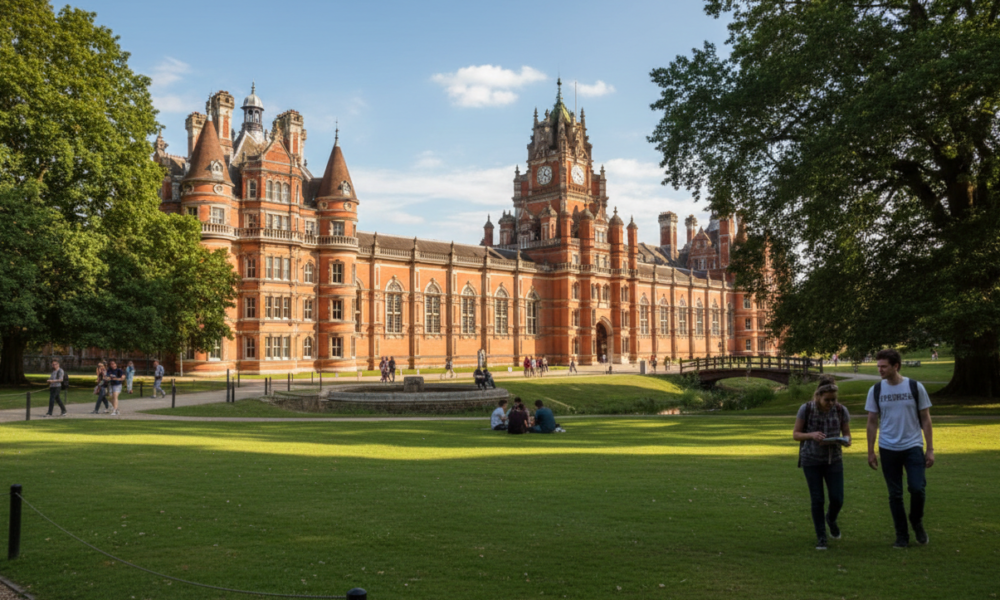
Several leading British universities are preparing to establish physical campuses in India, a move that reflects both the deepening crisis in higher education financing in the United Kingdom and India’s growing ambition to position itself as a global education hub.
Universities such as University of Southampton, University of Surrey, and University of York are among those exploring or advancing plans to operate in India. The shift is enabled by India’s regulatory reforms announced in 2023, which for the first time formally opened the door for foreign universities to set up degree-granting campuses within the country.
For UK institutions, the timing is not accidental. British universities are under increasing financial strain at home, driven by stagnant domestic tuition fees, declining real-term government support, and growing uncertainty around international student inflows. India, with its vast and youthful population and an expanding middle class willing to invest heavily in education, presents a compelling alternative market.
From India’s perspective, the policy marks a significant departure from decades of cautious protectionism in higher education. Allowing reputed foreign universities to operate locally is intended to curb the outflow of Indian students — and foreign exchange — while raising academic standards through competition and collaboration. It also aligns with the government’s broader narrative of positioning India as a destination, rather than merely a source, in the global education economy.
However, the move is not without its complexities. Questions remain around affordability, regulatory oversight, faculty hiring, and whether foreign campuses will genuinely widen access or primarily cater to an elite segment. There is also the unresolved tension between treating education as a public good versus a market commodity — a debate that has sharpened as global universities increasingly behave like multinational enterprises.
What is clear is that the arrival of UK universities in India is less about academic altruism and more about structural shifts in global higher education. As Western universities search for financial sustainability, and India seeks international validation for its education reforms, the convergence of interests is reshaping where — and for whom — higher education will be delivered in the coming decade.







No Comment! Be the first one.