







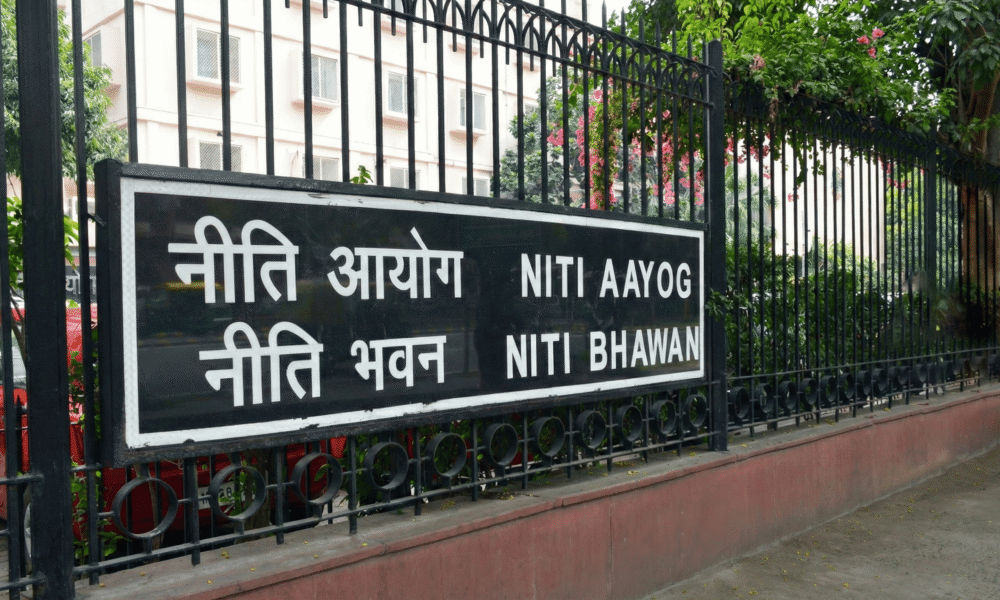
NITI Aayog report flags Gujarat as early mover in higher education globalisation
Ahmedabad: Gujarat is accelerating the rollout of education reforms aligned with the National Education Policy 2020, positioning the Gujarat Biotechnology University as a key institutional vehicle to...

Ahmedabad: Gujarat is accelerating the rollout of education reforms aligned with the National Education Policy 2020, positioning the Gujarat Biotechnology University as a key institutional vehicle to translate policy intent into practice.
The state government has expanded the mandate of GBU to function as a hub for interdisciplinary learning, industry-aligned research and skill-focused higher education. Officials said the approach reflects Gujarat’s attempt to move faster than many states in operationalising NEP provisions, particularly those related to flexible curricula, research integration and employability-driven programmes.
Established with a focus on biotechnology and allied sciences, Gujarat Biotechnology University has steadily broadened its academic and research footprint. The university is now offering programmes that combine life sciences with data analytics, entrepreneurship and regulatory studies, mirroring the policy emphasis on multidisciplinary education.
State officials argue that GBU’s structure allows it to bypass some of the inertia seen in older public universities. Academic collaborations with industry, credit-based internships and modular course design are being scaled up to ensure faster alignment with emerging workforce needs.
The university has also prioritised research translation, with faculty and students encouraged to work on applied projects in partnership with startups, research laboratories and manufacturing units. According to officials, this model is intended to shorten the distance between classrooms and commercial application, a recurring gap identified in India’s higher education system.
Gujarat’s early push has included streamlined approvals, targeted funding support and flexibility in programme design. Policymakers believe this gives institutions like GBU greater autonomy to experiment while remaining anchored to national regulatory frameworks.
Education experts note that Gujarat’s strategy reflects a broader shift among states seeking competitive advantage through faster education reform. By operationalising NEP elements ahead of peers, states hope to attract students, research funding and industry partnerships in a crowded higher education landscape.
However, analysts caution that rapid expansion must be matched by academic rigour and governance capacity. Sustaining quality faculty recruitment, research output and global relevance will be critical if early movers like GBU are to justify their reform-first positioning.
For now, Gujarat’s bet is clear. By using GBU as a reform testbed, the state is signalling that policy execution, not policy articulation, will define the next phase of higher education competition in India.









No Comment! Be the first one.