






India wants to host a million foreign students by 2047. The ambition is clear, the gaps are not small
India has set itself an audacious target in higher education: to become a destination for more than a million international students by the centenary of Independence in 2047. The goal, articulated in...

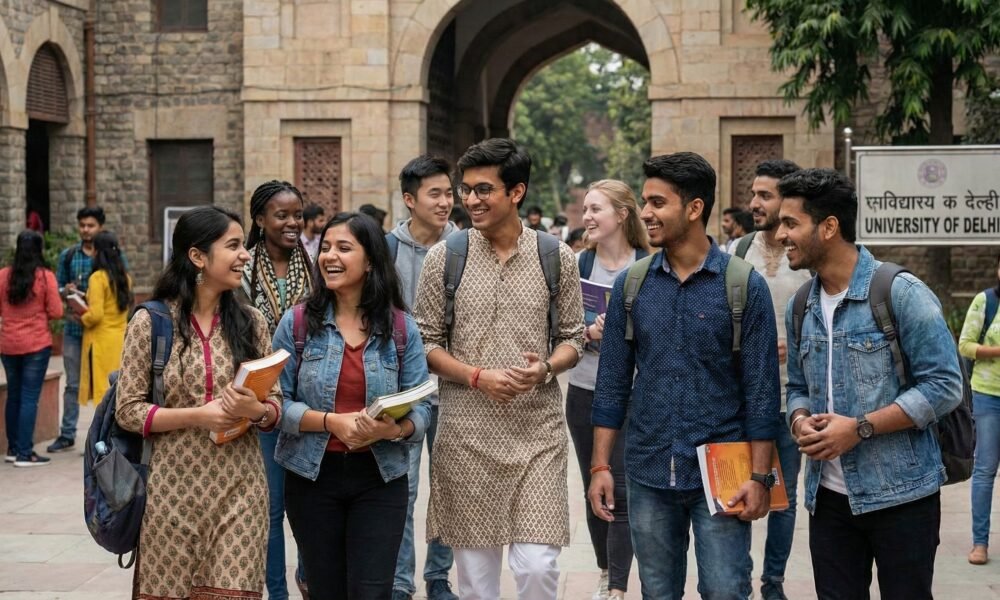
India has set itself an audacious target in higher education: to become a destination for more than a million international students by the centenary of Independence in 2047. The goal, articulated in a government-backed study on the internationalisation of higher education, reflects a desire to rebalance India’s global academic position, from a country that overwhelmingly sends students abroad to one that also attracts talent at scale.
The logic is compelling. India today runs the world’s second-largest higher education system, with over 1,200 universities and tens of millions of enrolled students. Yet its presence in the global education market remains modest. In 2021–22, fewer than 50,000 international students chose India as a study destination, while more than a million Indian students pursued degrees overseas. The economic cost of this imbalance is substantial, with families spending tens of billions of dollars annually on foreign education, alongside the longer-term loss of skilled human capital.
The report projects that with sustained reforms, India could raise inbound international enrolment to between 85,000 and 150,000 by 2030, scale this up to around 3.6 lakh by the mid-2030s, and potentially reach the one-million mark by 2047. These projections, however, come with a clear caveat: growth is not automatic and ambition alone will not deliver outcomes.
Several structural weaknesses continue to undermine India’s attractiveness as a global education hub. Research capacity remains uneven, global academic exposure is limited outside a handful of elite institutions, and industry-academia linkages are often weak. Curricula in many universities lag behind global standards, reinforcing the perception that foreign degrees offer better academic depth, research opportunities, and career mobility.
The study calls for a coordinated national strategy on internationalisation. This includes internationalising campuses at home through joint degree programmes, faculty exchanges, and globally aligned curricula. It also recommends the creation of dedicated higher education hubs, deeper research collaboration with foreign institutions, and stronger student support systems that address academic, cultural, and administrative barriers faced by international learners.
The challenge for policymakers is not just to attract foreign students, but to raise the overall quality and credibility of India’s universities. Without sustained investment in research, faculty development, and governance reform, the target risks remaining aspirational. The promise of hosting a million international students by 2047 is, in effect, a test of whether India can translate scale into excellence and intent into institutional transformation.





No Comment! Be the first one.