







IIT undergraduate enrolment rises 23% as intake crosses 80,000 across 23 campuses
Undergraduate enrolment across India’s 23 Indian Institutes of Technology has registered a growth of nearly 23 per cent over the past few years, with total student strength in BTech and other...

Undergraduate enrolment across India’s 23 Indian Institutes of Technology has registered a growth of nearly 23 per cent over the past few years, with total student strength in BTech and other undergraduate programmes now crossing the 80,000 mark. Data shared by the Ministry of Education in Parliament points to a steady rise in intake, driven by a calibrated expansion of seats, operational readiness of newer campuses and targeted policy measures to widen access to premier technical institutions.
A few academic cycles ago, the combined undergraduate strength across IITs stood in the mid 60,000 range. Since then, phased additions to sanctioned intake have pushed the numbers upward. The increase has not been confined to one or two institutes but spread across the IIT network, including both older, established campuses and newer institutes set up over the past decade and a half. Authorities have indicated that the expansion has been carried out in a planned manner, taking into account infrastructure, faculty recruitment and student support systems.
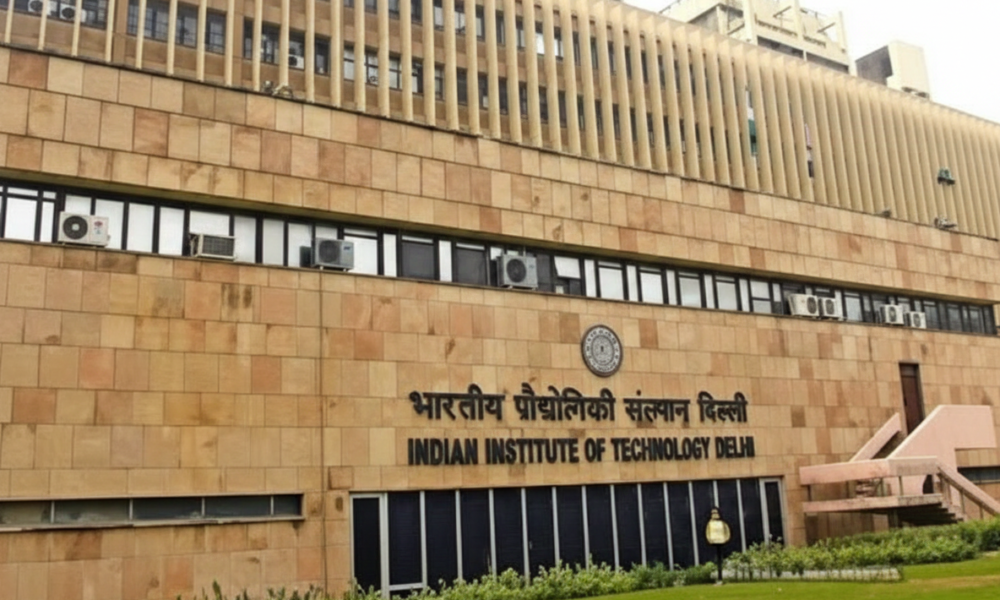
Older IITs such as Indian Institute of Technology Delhi, Indian Institute of Technology Bombay and Indian Institute of Technology Madras have introduced selective increases in high demand branches, especially computer science, electrical engineering and mechanical engineering. These campuses have also rolled out interdisciplinary programmes that combine core engineering with data science, artificial intelligence, computational biology and other emerging fields. The idea has been to respond to evolving industry needs while maintaining academic depth in foundational disciplines.
Newer IITs, many of which were announced after 2008, have recorded sharper percentage growth in undergraduate intake. As these institutes transitioned from temporary campuses to permanent facilities, they gradually scaled up admissions. With academic blocks, laboratories and hostels becoming fully operational, their capacity to admit larger cohorts has strengthened. Institutes such as Indian Institute of Technology Guwahati and Indian Institute of Technology Hyderabad have seen steady expansion aligned with infrastructure development.
A significant factor behind the rise in numbers has been the creation of supernumerary seats for women candidates. Introduced to address gender imbalance in engineering education, these additional seats are over and above the regular sanctioned intake. Since the rollout of this policy, the proportion of women in BTech programmes across IITs has improved visibly. In earlier years, women accounted for a relatively small share of the undergraduate cohort. Recent admission cycles show a marked increase, reflecting sustained policy attention on inclusion.
Officials have maintained that while intake has grown, the focus on academic standards remains unchanged. Faculty recruitment has been undertaken in parallel with seat expansion. Many IITs have conducted hiring drives to fill vacant teaching positions and strengthen research groups. The emphasis, according to the Ministry, is on preserving healthy student to faculty ratios and ensuring that teaching quality does not suffer as numbers rise.
Infrastructure augmentation has accompanied the enrolment increase. Across campuses, new lecture halls, advanced laboratories, research centres and hostel facilities have been added. Student amenities such as libraries, sports complexes and health centres have also been expanded to meet rising demand. The expansion has required significant capital expenditure, funded through central allocations and institutional resources.
The growth in undergraduate strength is part of a broader national objective to enhance access to quality higher education. Policymakers have repeatedly stressed the need to raise the gross enrolment ratio and build capacity in science and technology disciplines. By increasing seats in IITs, the government aims to produce a larger pool of highly trained engineers capable of contributing to sectors such as electronics, manufacturing, clean energy, infrastructure and digital services.
Demand for IIT seats continues to remain intense. Admission to undergraduate programmes is conducted through the highly competitive Joint Entrance Examination. Each year, hundreds of thousands of aspirants compete for a limited number of seats. Even with the recent expansion, the acceptance rate remains low, underscoring the premium attached to an IIT education. The rise in intake has offered opportunities to a larger number of qualified candidates without diluting the entrance process.
While undergraduate numbers have risen steadily, IITs are also strengthening postgraduate and doctoral programmes. Authorities have indicated that long term academic planning involves balancing undergraduate teaching with research output. Several institutes have increased PhD admissions, invested in sponsored research projects and built partnerships with industry and global universities. The expansion of undergraduate seats is being viewed as one component of a larger strategy to reinforce India’s research and development ecosystem.
Observers note that scaling up capacity in elite institutions presents both opportunities and challenges. On one hand, more seats mean broader access and a larger talent base. On the other, maintaining faculty quality, research productivity and campus culture requires sustained effort. IIT administrators have emphasised that expansion decisions are made after internal reviews of academic preparedness and physical infrastructure.
The geographical spread of IITs has also improved over time. With campuses located across different states, students from varied socio economic backgrounds now have greater access to high quality technical education closer to home. The newer IITs have contributed to regional development by attracting faculty, students and research funding to areas that previously did not host such institutions.
Education experts point out that the increase in undergraduate strength reflects a shift from a model of limited elite access to one that seeks controlled scaling. Rather than creating entirely new categories of institutions, policymakers have chosen to expand within the established IIT framework. This approach leverages existing brand value, governance structures and academic practices.
As India positions itself as a global technology hub, the role of IIT graduates in entrepreneurship, start ups, research laboratories and multinational corporations remains significant. Alumni from these institutes continue to occupy leadership roles in academia and industry worldwide. By increasing intake, the IIT system is likely to influence a larger segment of the country’s technical workforce in the coming decades.
The latest enrolment figures indicate that India’s premier engineering institutions are undergoing a phase of measured expansion. With undergraduate strength crossing 80,000 across 23 campuses, the IIT network is larger than at any point in its history. Authorities maintain that the objective is not merely numerical growth but a sustained commitment to quality, access and national development.




No Comment! Be the first one.