








IIT Bhubaneswar’s Strategic Leap into Semiconductor Research Signals New Era for India’s Tech Ecosystem
Bhubaneswar, 13 February 2026: In a significant development for India’s higher education and technology landscape, the Indian Institute of Technology (IIT) Bhubaneswar is being positioned as a major...

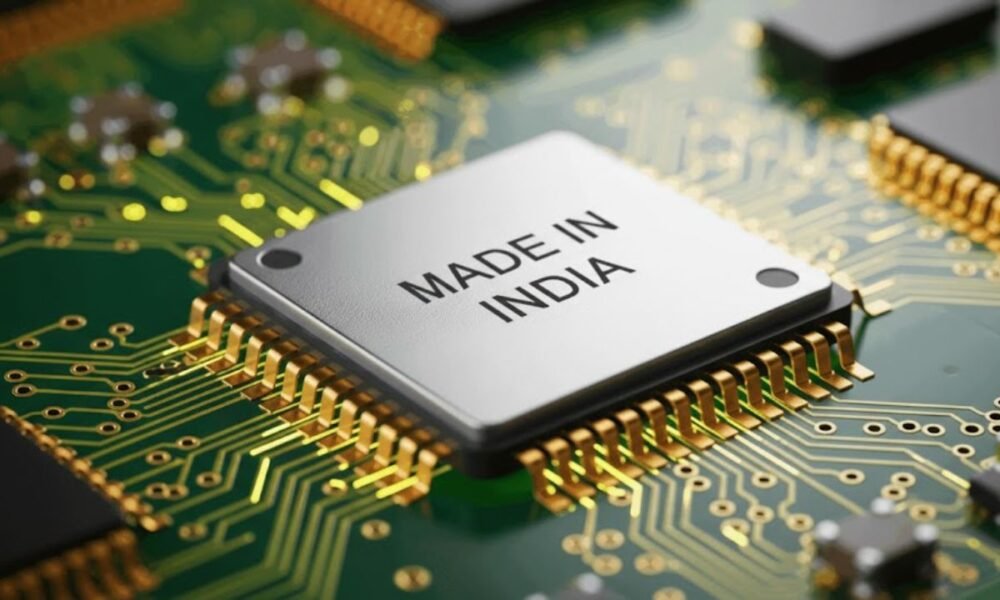
Bhubaneswar, 13 February 2026: In a significant development for India’s higher education and technology landscape, the Indian Institute of Technology (IIT) Bhubaneswar is being positioned as a major hub for semiconductor research and innovation. The announcement was made by Odisha’s Electronics and Information Technology Minister, Mukesh Mahaling, underscoring the state’s growing ambition to play a central role in India’s semiconductor ecosystem.
Speaking at the institute’s 18th Foundation Day celebrations, Mahaling highlighted IIT Bhubaneswar’s expanding engagement in advanced research, industry collaboration, and innovation. He noted that these efforts are steadily transforming the institute into a centre for power semiconductor research and development, with strong linkages to industry and applied technologies.
The move aligns with Odisha’s broader strategy to attract high technology investments and strengthen its position in emerging sectors. Several major initiatives are underway, including a proposed semiconductor and electronic system design manufacturing park, a SicSem semiconductor unit, and the recently approved NaMo Semiconductor Laboratory. Together, these projects aim to integrate academic research with industrial production and skill development.
The NaMo Semiconductor Laboratory, approved by the Union Ministry of Electronics and Information Technology, is expected to provide advanced facilities for chip design, fabrication, and training. It is designed to support the development of industry-ready professionals and reinforce India’s domestic chipmaking capabilities.
IIT Bhubaneswar’s Director, Professor Shreepad Karmalkar, has also emphasised the institute’s evolving role as a research and innovation hub. Plans for a research and entrepreneurship park and the development of a 223-acre semiconductor and ESDM park near the campus are expected to deepen collaboration between students, faculty, startups, and established firms.
Participants at the event stressed the importance of integrating semiconductor research with fields such as artificial intelligence, data centres, and advanced computing. This convergence, they argued, is essential for strengthening India’s technological self-reliance and meeting long-term development goals.
As national policy continues to prioritise chip manufacturing under the India Semiconductor Mission, IIT Bhubaneswar’s emergence as a semiconductor hub marks a critical shift. It reflects a growing effort to link higher education with strategic industries and positions the institute as a key contributor to future engineering education, high-tech skills development, and India’s place in the global technology value chain.








No Comment! Be the first one.