




Government urges systemic shift in inclusive education strategy, launches national teacher training initiative
New Delhi. The Ministry of Education urged a systemic commitment to inclusive education for children with special needs at a national summit, stressing that institutional support must take precedence...

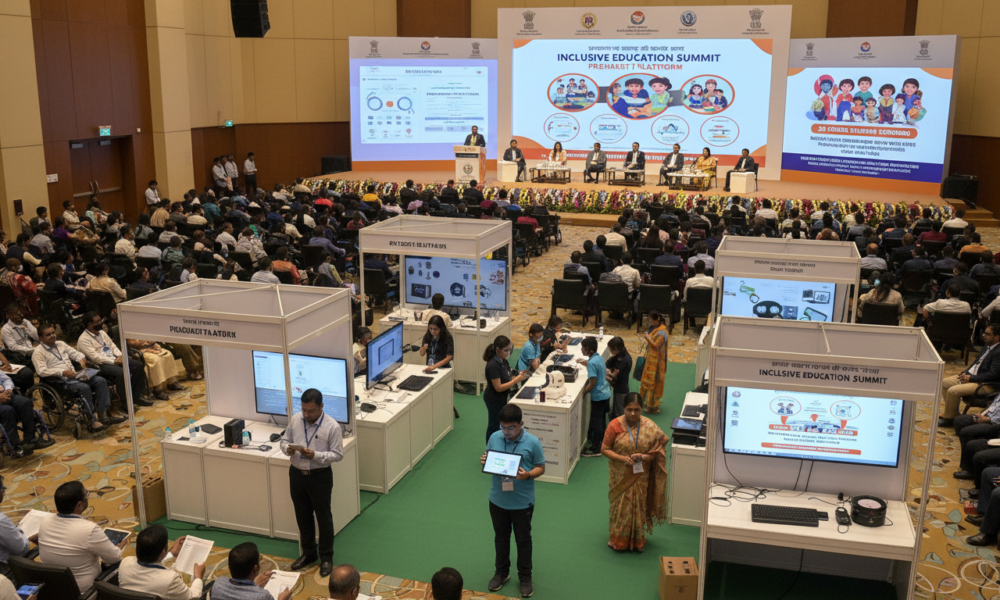
New Delhi. The Ministry of Education urged a systemic commitment to inclusive education for children with special needs at a national summit, stressing that institutional support must take precedence over dependence on civil society and parents to deliver equitable learning opportunities.
At the Inclusive Education Summit, officials underscored the need for strengthened mechanisms at the school and district levels to ensure access and meaningful participation for children with special needs across the country. They announced a dedicated national training programme for general teachers, designed to prepare educators to address diverse learning needs in mainstream classrooms.
Ira Singhal, deputy secretary at the Department of School Education and Literacy, said the summit brought together government representatives, civil society organisations and parent groups with the shared objective that every child must be reached and supported. “A strong public education system will reduce the need for others to fill gaps in provision,” she said.
The three-day summit, held in New Delhi, featured sessions on assistive technologies and learning tools. Presentations by institutions such as AIIMS, ICMR, NCERT and IIT Delhi showcased devices and innovations aimed at helping children with diverse needs engage more effectively in learning. Delegates were encouraged to adopt and scale such solutions.
Union Education Minister Dharmendra Pradhan reaffirmed the government’s commitment to inclusive education as a reflection of national purpose and social dignity. He highlighted the goal of identifying and screening 25 crore students to support early detection of learning challenges and promote their participation through appropriate interventions and technology.
Officials also outlined developments related to the Pre-Assessment Holistic Screening Tool (PRASHAST), a digital platform intended to streamline data entry and implementation of support measures at the field level. A timeline was shared for rolling out structured training for teachers, including a five-day, eight-module programme to begin by the end of March, with states urged to nominate master trainers to lead the effort.
On the summit’s final day, state governments presented examples of effective inclusive practices, such as plans for autism centres in Andhra Pradesh and initiatives led by Haryana and West Bengal. The Rehabilitation Council of India outlined plans to expand training and professional certification for special educators, aiming to build long-term capacity in the workforce.
This renewed drive aligns with policy frameworks such as the Rights of Persons with Disabilities Act, 2016 and the National Education Policy 2020, both of which promote the inclusion of children with disabilities in mainstream education and call for equitable support structures within schools.


No Comment! Be the first one.