







Social media post comparing global university costs highlights affordability gap in higher education
A recent post by Parth Rastogi on X https://x.com/theparthrastogi/status/2040708605796905253?s=20 has sparked discussion around the cost of higher education globally, with comparisons showing...

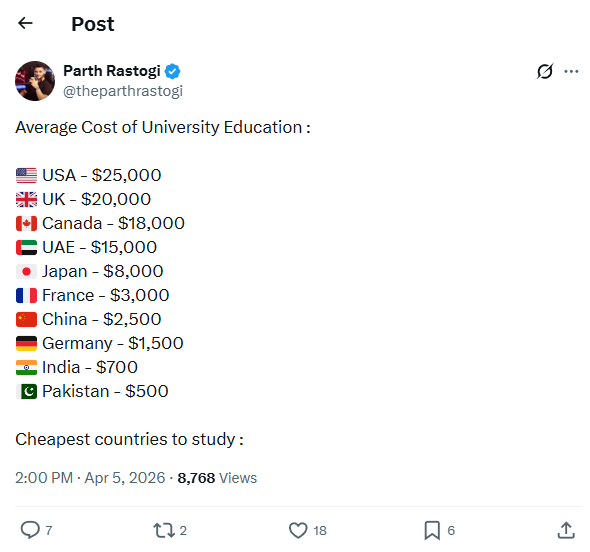
A recent post by Parth Rastogi on X https://x.com/theparthrastogi/status/2040708605796905253?s=20 has sparked discussion around the cost of higher education globally, with comparisons showing significant differences between countries.
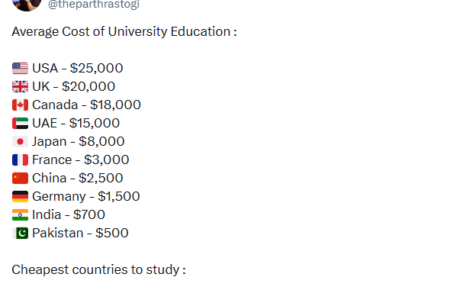
In the post, the creator shared average annual university costs across major countries, placing the United States at around $25,000, followed by the United Kingdom at $20,000 and Canada at $18,000. Other countries such as the UAE, Japan and France were listed with comparatively lower costs, while India and Pakistan were shown among the least expensive options.
The post highlighted that India’s average cost of university education stands at approximately $700 annually, significantly lower than most developed nations. The data quickly gained traction online, prompting reactions from students and aspirants considering overseas education.
Debate emerges over affordability, quality and accessibility of global education
The comparison has triggered broader conversations about affordability and accessibility in higher education. While countries such as India offer relatively low-cost education, questions remain about infrastructure, global exposure and employment opportunities compared to international institutions.
Education experts have noted that while tuition costs are a major factor, students often consider additional elements such as quality of education, research opportunities and return on investment when choosing where to study. In contrast, higher costs in countries like the United States and the United Kingdom are often associated with globally ranked universities and better access to international job markets.
The post also brought attention to the growing interest in affordable education destinations, particularly among students from developing countries. Nations offering lower tuition fees are increasingly being considered viable options, especially as the cost of studying abroad continues to rise.
While the figures shared in the post reflect general estimates and may vary across institutions and courses, the discussion highlights a key concern for students worldwide balancing cost with quality and long-term career prospects.
As global mobility in education continues to grow, such comparisons are likely to play an important role in shaping student decisions and policy discussions around accessibility and affordability in higher education.



No Comment! Be the first one.