








From Many Regulators to One: A High-Stakes Reordering of Higher Education Governance
The introduction of the Viksit Bharat Shiksha Adhishthan Bill, 2025 marks one of the most consequential attempts in decades to redraw the regulatory map of Indian higher education. Tabled in...

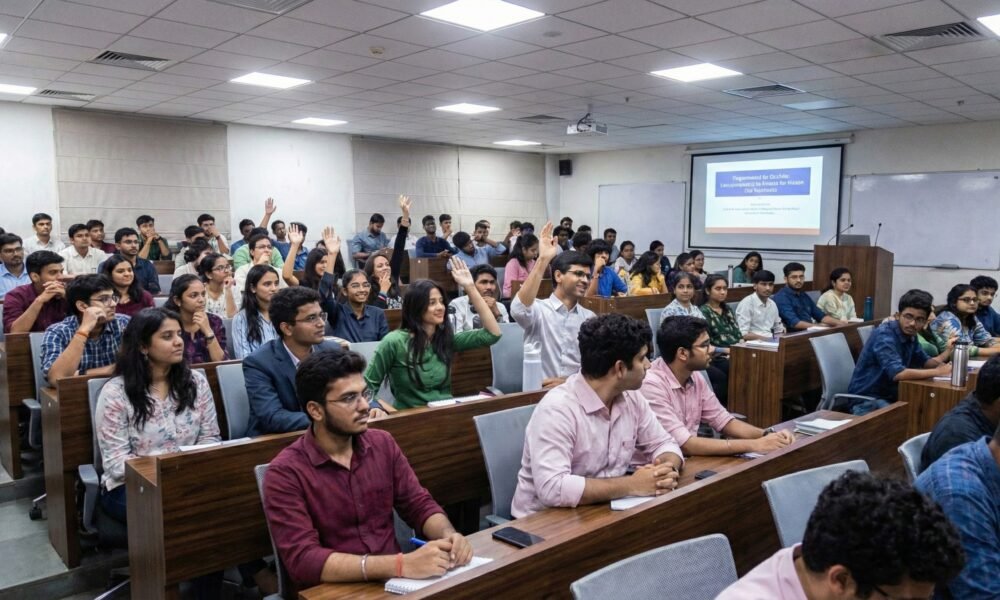
The introduction of the Viksit Bharat Shiksha Adhishthan Bill, 2025 marks one of the most consequential attempts in decades to redraw the regulatory map of Indian higher education. Tabled in Parliament by Education Minister Dharmendra Pradhan, the Bill proposes a decisive break from the country’s long standing model of multiple regulators, seeking to replace them with a single, unified framework.
At the heart of the proposal is the subsuming of the University Grants Commission, the All India Council for Technical Education, and the National Council for Teacher Education into a new overarching body. The stated aim is to move towards what policymakers describe as a “light-but-tight” regulatory system, one that reduces duplication, eases compliance burdens, and shifts attention from procedural oversight to academic outcomes. The Bill is currently under examination by a Joint Parliamentary Committee.
This move is firmly rooted in the intellectual and policy foundations laid by the National Education Policy 2020, which argued that fragmented regulation had produced compliance fatigue, uneven quality, and constrained innovation. In that sense, the Bill is not merely administrative housekeeping. It represents a deeper statement about how much autonomy the state is willing to grant universities, how trust is to be balanced with accountability, and how national coherence can coexist with institutional diversity.
India has arrived at similar turning points before. The post-Independence university reforms of the 1950s and the expansion of technical education in the 1990s both reshaped the sector in lasting ways. This proposed consolidation belongs in that lineage. It reflects a belief that the governance of knowledge institutions must evolve if India’s higher education system is to scale, diversify, and compete globally.
Yet the consolidation also raises difficult questions. Can a centralised regulator preserve the disciplinary depth and professional nuance that specialised bodies were designed to protect? How will academic freedom and pedagogical autonomy be insulated from bureaucratic overreach? And can a single architecture respond with equal sensitivity to liberal education, professional training, teacher preparation, and advanced research?
These are not merely technical concerns. Higher education draws its strength from difference, context, and intellectual plurality. While uniformity can bring clarity and efficiency, it risks flattening the ethical judgement and academic discretion that universities rely on. The challenge lies in ensuring that centralisation does not translate into standardisation of thought.
Between enthusiastic endorsement and outright opposition lies a more measured position. It accepts the case for consolidation but argues for strong guardrails. These include domain specific councils with real academic authority, a clear separation between regulatory compliance and academic guidance, and meaningful representation of teachers, researchers, and public universities in decision making structures.
As the Joint Parliamentary Committee deliberates, the real test of the Bill will not be whether it simplifies regulation on paper, but whether it builds a system in which institutions are governed through trust rather than fear. If centralisation and plurality can be carefully balanced, this reform could mark a genuine reordering of Indian higher education. If not, it risks replacing one set of rigidities with another.








No Comment! Be the first one.