








CBSE Reaffirms No Alteration in Class 10 Basic Mathematics Exam Structure Amid Student Feedback
The Central Board of Secondary Education has issued a formal clarification stating that there was no change in the structure or pattern of the Class 10 Basic Mathematics question paper, following...


The Central Board of Secondary Education has issued a formal clarification stating that there was no change in the structure or pattern of the Class 10 Basic Mathematics question paper, following concerns voiced by a section of students after the examination. The board asserted that the paper was prepared strictly according to the prescribed syllabus, blueprint, and assessment guidelines released at the beginning of the academic year.
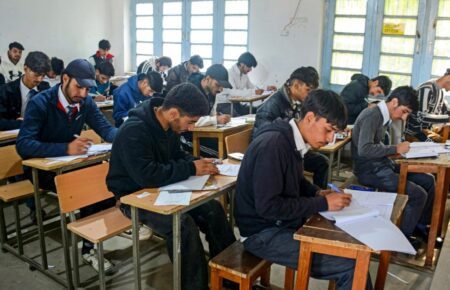
The clarification comes in the wake of feedback from students who had opted for Basic Mathematics and felt that the paper was more demanding than expected. Several candidates indicated that the inclusion of multi step, application oriented questions made the examination lengthier and required deeper conceptual clarity. Some reported difficulty in completing the paper within the allotted time.
CBSE officials responded by reiterating that the design of the Basic Mathematics paper remains aligned with the curriculum objectives defined by the board. They stated that the distribution of marks across various sections, including objective type questions, short answer questions, and case study based items, followed the notified blueprint. According to the board, there was no deviation in terms of syllabus coverage or assessment pattern.
The dual level Mathematics system for Class 10 was introduced to provide flexibility to students with different academic goals. Under this system, learners can choose between Basic Mathematics and Standard Mathematics. Basic Mathematics is intended for students who do not plan to pursue the subject in senior secondary classes, while Standard Mathematics is meant for those who intend to continue Mathematics in Classes 11 and 12. The move was designed to reduce academic pressure without restricting academic mobility.
Students who raised concerns said that while the syllabus may have been adhered to, the framing of certain questions required detailed reasoning and extended calculations. A few candidates mentioned that case study based problems and real life application questions added to the complexity. Parents also shared similar views, stating that children who opted for Basic Mathematics expected a more straightforward paper.
In its clarification, CBSE highlighted that competency based assessment forms an integral part of its current examination approach. Over the past few years, the board has gradually increased the share of questions that test understanding and application of concepts rather than memorisation. Officials explained that such questions may appear lengthy or unfamiliar, yet they remain within the scope of the prescribed curriculum.
Education experts observed that perception of difficulty often varies depending on preparation methods. Students who focus primarily on direct formula based practice may find application driven questions more challenging. Teachers have suggested that regular exposure to sample papers, exemplar problems, and varied question formats can help students build confidence and improve time management.
School principals who conducted internal reviews of the question paper indicated that the majority of problems were derived from the NCERT textbook and officially released sample materials. They advised students not to rely solely on peer discussions or social media reactions while assessing performance. Many schools are waiting for the official marking scheme to provide a clearer picture of how answers will be evaluated.
CBSE also underlined that every board examination paper undergoes multiple stages of moderation before finalisation. Subject experts review question sets to ensure clarity, balanced difficulty level, and adherence to learning outcomes. The board stated that fairness and uniformity remain central to its evaluation process.
The discussion surrounding the Basic Mathematics paper has once again brought attention to the need for informed decision making when selecting between Basic and Standard Mathematics. Schools are expected to counsel students and parents carefully before the registration process. While students who opt for Basic Mathematics can switch to Standard in Class 11 under specific conditions, such transitions require additional academic preparation.
Academic counsellors believe that clearer communication about exam expectations can reduce anxiety. Providing students with adequate practice in case study based and scenario driven questions during classroom teaching may bridge the gap between expectation and experience. Teachers have also emphasised structured revision schedules and mock examinations to help students adapt to evolving assessment styles.
Board examinations in India carry significant weight in shaping academic pathways. As a result, even a perception of increased difficulty can lead to widespread discussion. Education analysts point out that the shift toward concept based evaluation reflects broader changes in school education aimed at strengthening analytical and problem solving skills.
CBSE’s recent statement seeks to reassure stakeholders that established norms were followed. Officials have urged students to remain focused on upcoming examinations rather than drawing early conclusions. They have also reminded schools to share accurate information and discourage speculation.
The marking process for the examination is expected to begin shortly, with trained evaluators following standardised guidelines. Moderation mechanisms are in place to address any discrepancies and ensure consistency in awarding marks. Students are advised to wait for official results before forming judgments about performance.
This episode highlights the evolving dynamics of assessment in school education. As examination formats increasingly emphasise comprehension and application, preparation strategies may need to adapt. Students, teachers, and parents alike are adjusting to these changes while navigating the pressures associated with board exams.
For many learners, the Basic Mathematics option remains a practical choice that supports academic balance. The board’s clarification reinforces that the intent of the dual level system remains intact. By maintaining adherence to notified frameworks and ensuring transparent communication, CBSE aims to sustain confidence in the examination process.
As the academic year progresses, attention will gradually shift to result trends and broader performance patterns. In the meantime, educators continue to encourage steady preparation, disciplined revision, and constructive dialogue. Clear guidance and timely communication remain central to ensuring that examination related concerns are addressed effectively within India’s school education system.
Stay connected for comprehensive coverage on board examinations, policy decisions, and student focused developments across the country.





No Comment! Be the first one.