








Telangana fee hike row intensifies as parents demand regulation
Private schools in Telangana are facing growing backlash from parents over a sharp increase in school fees for the 2026–27 academic session. Reports indicate that several institutions have raised...

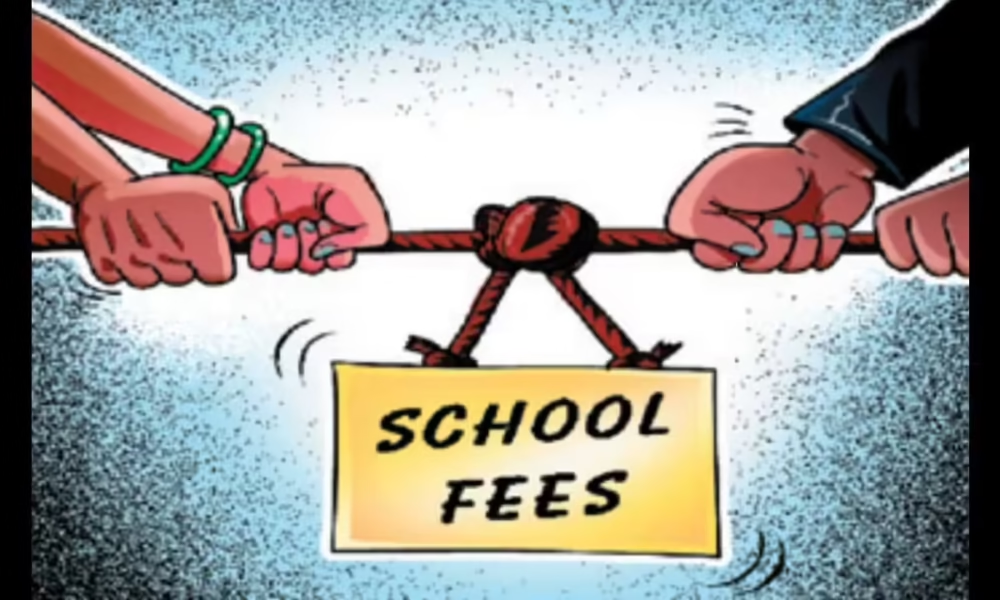
Private schools in Telangana are facing growing backlash from parents over a sharp increase in school fees for the 2026–27 academic session. Reports indicate that several institutions have raised fees by 30 to 50 per cent, prompting concerns among families across multiple districts.
Parents have alleged that the fee hikes have been implemented without adequate transparency, with schools introducing additional charges under various heads such as books, uniforms, transport and extracurricular activities. Many families have said the cumulative cost has made private schooling increasingly unaffordable, particularly for middle-income households.
The issue has led to protests and representations by parent associations, who have called for immediate government intervention. Several groups have demanded the introduction of stricter fee regulation policies to ensure that private schools do not impose arbitrary increases without proper justification.
Parents seek stricter oversight as education costs rise
Parent bodies have urged authorities to establish a clear framework that defines permissible fee structures and mandates disclosure of cost components by schools. They have also sought mechanisms for grievance redressal, allowing parents to raise concerns and seek clarification on fee revisions.
Education officials have acknowledged receiving complaints and said the matter is under consideration. Authorities indicated that inspections and reviews may be conducted to assess whether schools are complying with existing norms related to fee regulation.
The development has once again brought attention to the broader issue of rising education costs in urban areas. With limited seats in government schools and increasing reliance on private institutions, families often have few alternatives, making them more vulnerable to fee hikes.
Experts have noted that while schools may cite rising operational costs as a reason for the increase, the absence of a uniform regulatory framework has led to inconsistencies in how fees are structured and revised.
As discussions between stakeholders continue, further clarity is expected on possible policy measures. For many parents, the outcome will be crucial in determining access to affordable and equitable education for their children in the coming academic session.







No Comment! Be the first one.