








NCERT to release new Class 9 textbooks from April 6: revised content aligned with updated curriculum
The National Council of Educational Research and Training is set to release new Class 9 textbooks from April 6, introducing revised content aligned with the updated curriculum framework. The move...

The National Council of Educational Research and Training is set to release new Class 9 textbooks from April 6, introducing revised content aligned with the updated curriculum framework. The move comes as part of broader efforts to implement changes in school education in line with evolving academic and policy priorities.
Officials said the new textbooks have been developed after an extensive review process involving subject experts, with a focus on improving conceptual clarity and reducing rote learning. The updated material is expected to reflect a more structured and application-oriented approach, in keeping with recent curriculum reforms.
The rollout had been delayed earlier due to the time taken for content review and finalisation. Authorities maintained that the additional time was required to ensure accuracy, coherence and alignment with the broader goals of the education system. Schools had begun the academic session without the revised books, relying instead on existing resources and preliminary guidelines.
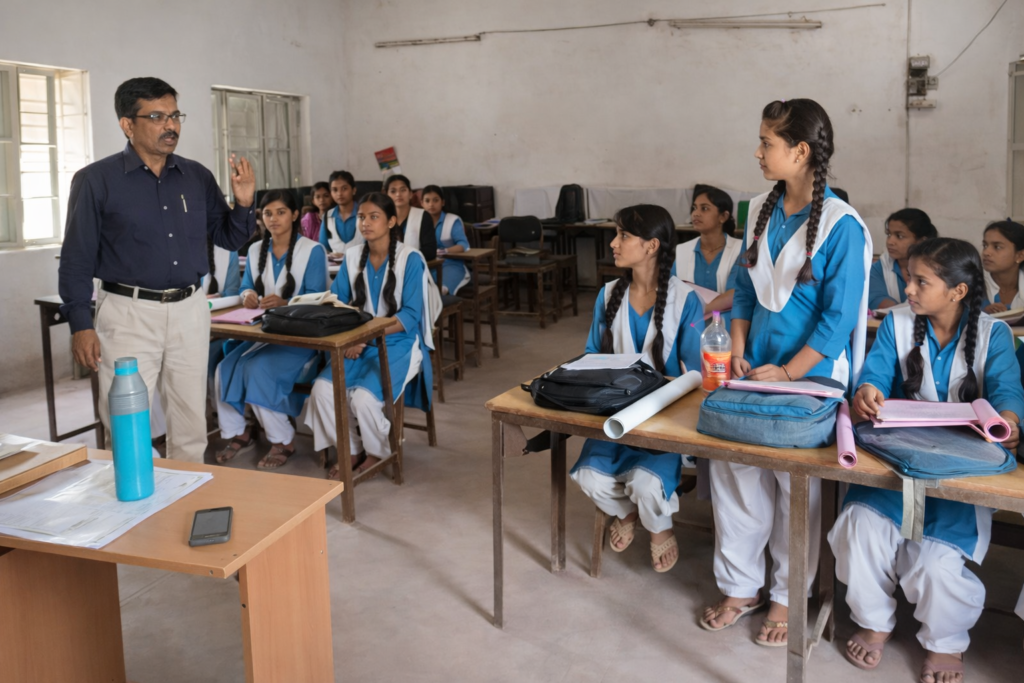
Delay in rollout linked to review process: phased implementation expected across schools
With the release now scheduled, schools are expected to gradually transition to the new textbooks as they become available. Officials indicated that the adoption will take place in a phased manner to avoid disruption in classroom teaching during the early weeks of the session.
The revised textbooks are likely to place greater emphasis on critical thinking, problem-solving and interdisciplinary learning. Educators have pointed out that such changes are necessary to bridge the gap between theoretical knowledge and practical application, particularly at the secondary school level where students begin to prepare for board examinations.
At the same time, concerns have been raised regarding the timely availability of books across regions, especially in schools that depend on physical distribution channels. Teachers may need to continue using supplementary materials until all students have access to the updated textbooks.
The introduction of the new books also places importance on teacher preparedness. Experts have noted that effective implementation will depend on how well educators are able to adapt to the revised content and teaching approach. Training modules and orientation programmes are expected to support this transition.
The development comes at a time when education authorities are seeking to align classroom learning with skill-based outcomes and future academic requirements. By revising textbooks at the Class 9 level, the focus is on building a stronger foundation for students as they progress towards higher classes.
Students and parents have been advised to stay updated through official channels for information on availability and distribution. As schools begin to adopt the new textbooks, the coming weeks will be crucial in determining how smoothly the transition is carried out across different institutions.







No Comment! Be the first one.