








Haryana’s three-language mandate tests the balance between policy intent and classroom reality
The Board of School Education Haryana has moved to implement the three-language formula for Classes 9 and 10, in line with the National Education Policy 2020. Students will now study an additional...

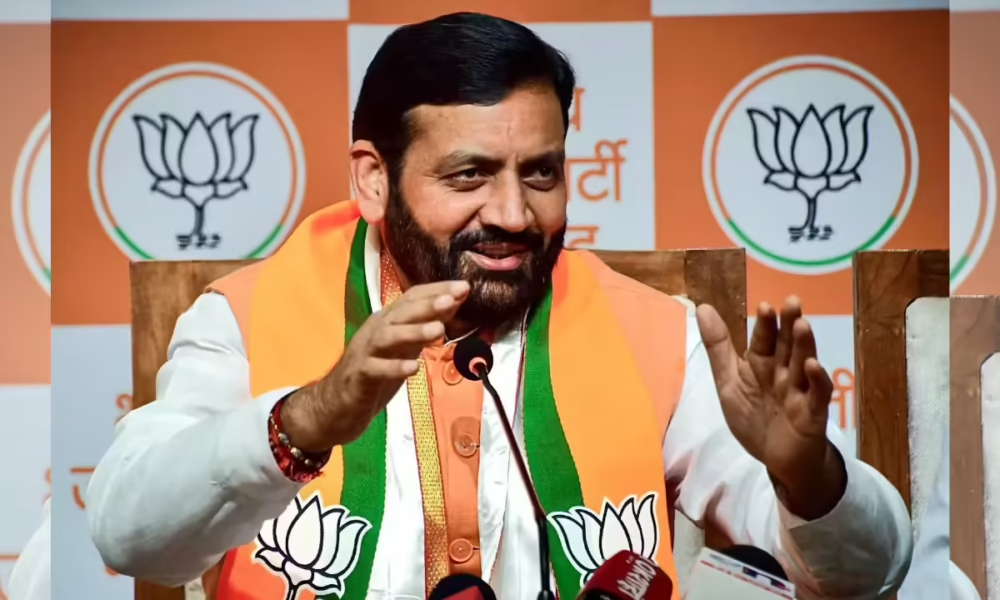
The Board of School Education Haryana has moved to implement the three-language formula for Classes 9 and 10, in line with the National Education Policy 2020. Students will now study an additional language alongside Hindi and English, a step the state argues will strengthen multilingual competence and align schooling with national reform goals.
At the level of policy, the rationale is difficult to contest. The National Education Policy has consistently argued that linguistic diversity is an educational asset, not a burden. Exposure to multiple languages at the school stage is expected to enhance cognitive flexibility and cultural awareness. Haryana’s decision signals an intent to translate this framework into practice rather than leaving it confined to policy documents.
Yet, the transition raises familiar questions. Government schools in particular continue to face shortages of trained language teachers. The addition of a third language will require not just curriculum adjustments but also investments in teacher recruitment, training, and classroom time management. Without this, the policy risks becoming an exercise in compliance rather than learning.
There is also the question of student load. At a stage where board exam pressures begin to intensify, the introduction of an additional subject could deepen academic stress unless accompanied by rationalisation elsewhere in the syllabus. The success of the move will depend on whether it is implemented with flexibility, allowing schools to adapt to local contexts rather than enforcing a rigid template.
Haryana’s decision reflects a broader shift in Indian education towards multilingualism as a core objective. Whether it delivers meaningful outcomes will depend less on the mandate itself and more on the state’s ability to support schools in carrying it out.






No Comment! Be the first one.