








ICAI Urges CSR Policy Shift to Support PM Internship Programme
The Institute of Chartered Accountants of India has approached the Union government with a proposal to modify corporate social responsibility provisions so that companies can support the Prime...

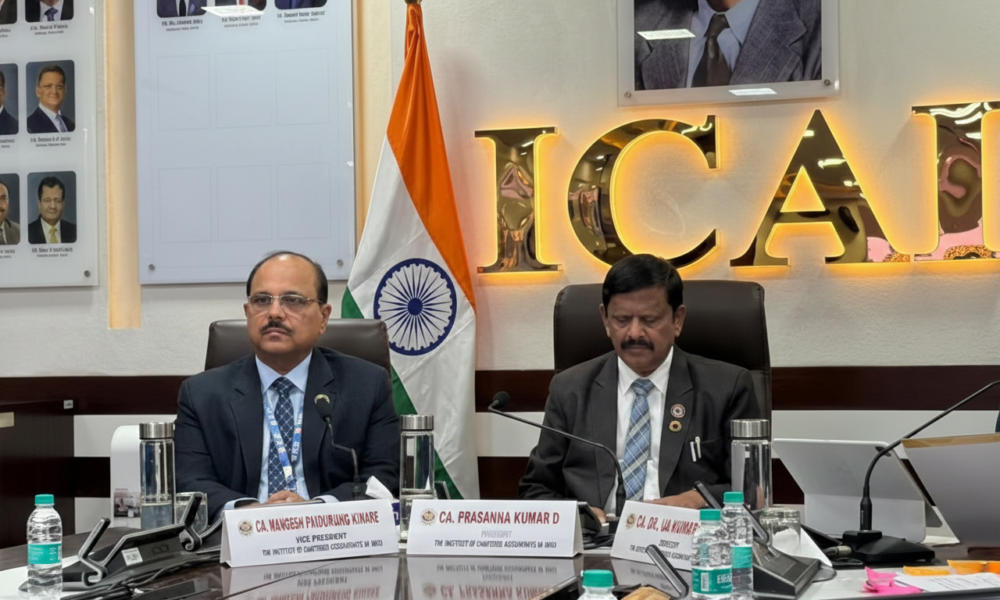
The Institute of Chartered Accountants of India has approached the Union government with a proposal to modify corporate social responsibility provisions so that companies can support the Prime Minister’s Internship Programme through their CSR allocations. The recommendation has been submitted to the Finance Ministry, with the institute urging policymakers to formally recognise structured internship sponsorship as an eligible CSR activity under the Companies Act.
Under existing regulations, companies meeting specified financial thresholds are required to spend a portion of their profits on CSR activities listed in Schedule VII of the Companies Act. These categories include education, healthcare, environmental sustainability and other social development areas. Internship funding, however, does not feature as a clearly defined category. ICAI has argued that bringing structured internship programmes within the CSR framework would widen industry participation in youth employability initiatives.
The institute has also proposed what it calls a “Corporate Mitra” structure. Under this model, companies would collaborate with professional bodies and educational institutions to design and host internships with defined learning outcomes. The framework envisions financial support for stipends, structured training modules, mentorship arrangements and a formal system of monitoring and evaluation.
According to ICAI, the objective is twofold. First, to strengthen the Prime Minister’s Internship Programme by attracting greater corporate engagement. Second, to bridge the persistent gap between academic education and industry requirements. The accounting body has pointed out that a significant number of graduates enter the labour market each year, yet many struggle to secure employment due to limited practical exposure. Structured internships, it maintains, can serve as an effective transition pathway from classroom learning to professional work environments.
The Prime Minister’s Internship Programme was introduced as part of the government’s broader skill development and employment strategy. It aims to place young candidates in industry settings for fixed durations, offering hands-on experience across sectors. While large corporations may have established internship systems, smaller enterprises and professional firms often face cost constraints when onboarding trainees. ICAI believes CSR-backed funding can ease this challenge and make participation more attractive.
Under the proposed arrangement, companies could allocate part of their mandatory CSR outlay to sponsor internship positions. This could include paying stipends to interns, covering training expenses and supporting supervision costs. Professional bodies such as ICAI may assist in identifying eligible candidates, coordinating placements and ensuring that participating firms adhere to defined training standards.
The institute has highlighted the potential role of chartered accountancy firms in expanding internship opportunities. Firms engaged in audit, taxation, compliance and advisory services routinely train article assistants and junior staff. Yet scaling structured internships beyond statutory training requirements can impose financial pressure, particularly on mid-sized partnerships. A CSR-linked mechanism, ICAI argues, would encourage more firms to open their doors to interns while maintaining quality oversight.
Industry observers note that CSR spending by Indian companies has grown steadily since mandatory provisions came into force. Each year, corporates collectively allocate substantial funds toward education, health and social welfare projects. Redirecting a portion of this expenditure toward structured internship initiatives could strengthen employability efforts without increasing the compliance burden on companies.
The proposal also reflects a broader policy shift toward aligning corporate responsibility spending with workforce preparation. Skill development already appears as an eligible CSR area under education-related activities. ICAI’s suggestion seeks clearer recognition for internship sponsorship as a direct and measurable pathway to skill acquisition. By explicitly categorising such spending, companies may gain greater clarity and confidence in allocating funds.
Any change to CSR eligibility norms would require examination by the Ministry of Corporate Affairs, which administers CSR regulations under company law. The Finance Ministry is expected to review ICAI’s submission before any formal proposal is advanced. Amendments to Schedule VII or issuance of interpretative guidance may be considered if the government decides to proceed.
Experts indicate that careful safeguards would be necessary to ensure transparency and accountability. CSR-funded internships would likely need defined eligibility criteria, reporting requirements and measurable outcomes. Monitoring mechanisms may include periodic reporting by participating companies and third-party assessments to verify compliance with training standards.
Supporters of the proposal argue that integrating CSR spending with internship schemes could create multiple benefits. For students and young professionals, it would mean access to structured workplace exposure and financial support. For companies, it offers an opportunity to build early talent pipelines and strengthen industry-academia linkages. For the broader economy, it may contribute to improved job readiness and smoother transitions into formal employment.
Critics, on the other hand, may question whether CSR funds should prioritise direct social welfare initiatives over employment-linked programmes. Policymakers would need to balance competing priorities within the CSR framework while ensuring that existing beneficiaries of education and health programmes are not adversely affected.
ICAI has maintained that internship support aligns with the spirit of CSR, as it promotes capacity building and long-term economic participation. By equipping youth with practical skills, the institute contends, companies would be investing in sustainable development outcomes rather than short-term interventions.
The government has not yet announced its stance on the proposal. If accepted, the move could mark a notable shift in how corporate social responsibility funds are deployed. It may also strengthen collaboration between professional bodies, educational institutions and industry players in delivering structured training opportunities.
For now, the recommendation remains under consideration. Its eventual outcome will determine whether CSR allocations can become a formal pillar supporting the Prime Minister’s Internship Programme and similar employability initiatives in the years ahead.







No Comment! Be the first one.