








Budget 2026 Recasts Education as Industrial Infrastructure
Education emerges in Budget 2026-27 not merely as a social sector, but as a long-term productivity engine aligned with industrial corridors, creative industries and employment pipelines. With an...


Education emerges in Budget 2026-27 not merely as a social sector, but as a long-term productivity engine aligned with industrial corridors, creative industries and employment pipelines.
With an allocation of ₹1.39 lakh crore, the government has announced a set of structural interventions that link physical education infrastructure, gender access and industry-aligned skilling.
The most consequential proposal is the development of University Townships along industrial corridors. These townships are envisioned as integrated clusters comprising universities, research parks, student housing, incubation centres and industry facilities. The objective is to reduce the traditional separation between campuses and production centres, enabling students to train closer to where jobs are being created.
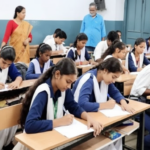
In a parallel move to improve female participation in higher education, the government will establish one girls’ hostel in every district. Officials indicated that the scheme prioritises districts with low female enrolment ratios and high dropout rates, particularly at the secondary and tertiary levels.
The Budget also makes a targeted bet on India’s creative economy. Under support for the AVGC (Animation, Visual Effects, Gaming and Comics) sector, the government will set up content creation laboratories in 15,000 secondary schools and 500 colleges. These labs will focus on animation, gaming design, virtual production and digital storytelling.
Complementing this is the announcement of a new National Institute of Design in Eastern India, expanding access to formal design education beyond traditional metropolitan clusters.
A high-powered Education-to-Employment Committee will be constituted to align curricula, certification frameworks and vocational training with emerging labour market needs, particularly in digital, electronics, design, creative media and advanced manufacturing.
Budget 2026’s education strategy reflects a shift away from incremental capacity addition towards spatial and sectoral integration. By embedding universities into industrial growth zones and aligning training with future industries, the government is attempting to ensure education spending translates more directly into employability and enterprise creation.
For edtech firms, skilling companies and higher-education institutions, this opens opportunities in campus development, curriculum design, digital labs and industry partnerships.







No Comment! Be the first one.