








Chinese Universities Make Gains in 2026 Global Rankings as US Institutions Lose Ground
Chinese universities have recorded notable gains in the 2026 global university ranking reports, signalling a shift in the global academic balance and reinforcing China’s role as a centre of higher...

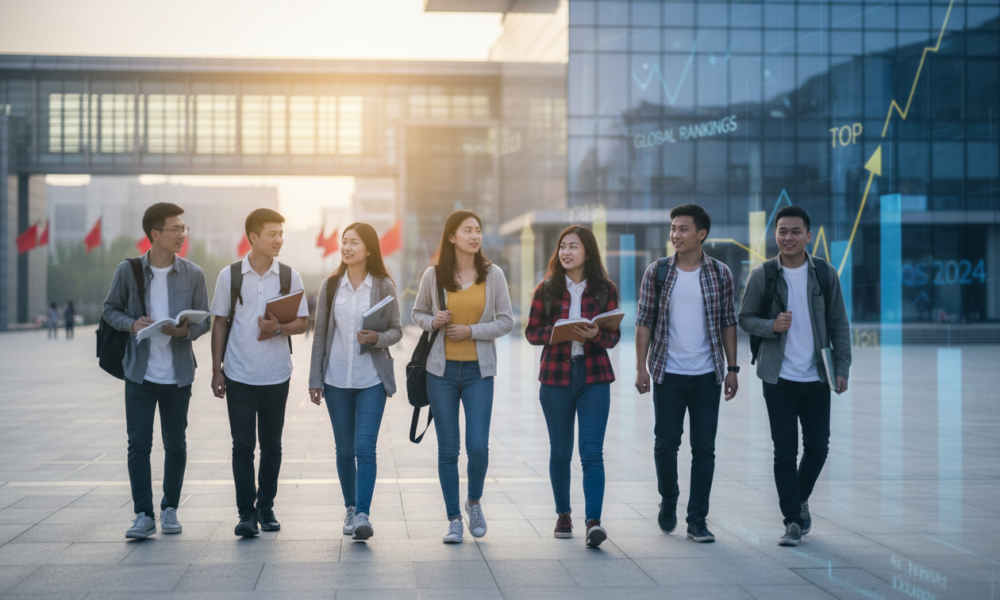
Chinese universities have recorded notable gains in the 2026 global university ranking reports, signalling a shift in the global academic balance and reinforcing China’s role as a centre of higher education excellence.
The latest figures show that while elite Western institutions retain many top positions, a larger number of Chinese universities climbed higher in the tables. Sustained state funding for research, increased collaboration with international partners and growing academic capacity are key factors behind these improvements.
According to a recent New York Times analysis, the Times Higher Education (THE) World University Rankings for 2026 again placed the University of Oxford at number one globally, followed by Massachusetts Institute of Technology, Princeton University and the University of Cambridge. Harvard University and Stanford University remain among the leaders, but Harvard slid to third in certain research-oriented listings.
Although US institutions still hold most of the top ten spots, the rankings reveal a broader trend of relative decline, with more than sixty American universities falling in position compared with their 2025 standings. By contrast, Chinese institutions such as Tsinghua University and Peking University rose significantly over the past decade, moving into positions just outside the top ten in THE rankings.
Hong Kong universities also strengthened their global presence, with six schools in the top 200. South Korea contributed four universities in the top 100, indicating a wider Asian rise in higher education performance.
Analysts say that while Western universities continue to excel in fields like biology and medical sciences, China’s rise has been driven by performance in areas such as chemistry and environmental science, supported by heavy government investment. Experts note that funding pressures in the United States and policy uncertainties around research support have compounded these global shifts.
University rankings remain an influential tool for students, faculty and policymakers worldwide, shaping decisions on where to study, work and invest in academic programmes. The changing patterns in global leagues are likely to influence international higher education strategies in the years ahead.






No Comment! Be the first one.