








Supreme Court steps in to ensure 25% free seats for poor children across schools
The Supreme Court on Monday moved to tighten enforcement of the provision mandating 25 percent free seats for children from economically weaker sections and disadvantaged groups in schools, observing...

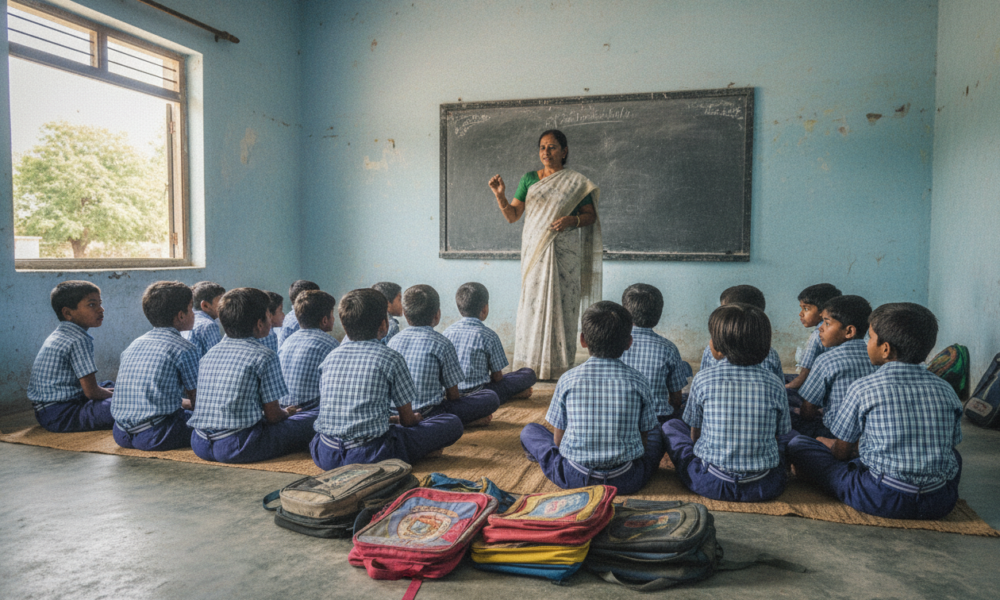
The Supreme Court on Monday moved to tighten enforcement of the provision mandating 25 percent free seats for children from economically weaker sections and disadvantaged groups in schools, observing that the statutory right cannot remain on paper due to weak implementation.
A Bench of Justices B R Gavai and K Vinod Chandran issued notices to the Centre, states, Union Territories, and education boards while hearing a petition highlighting large scale non compliance by private unaided schools with the quota prescribed under the Right of Children to Free and Compulsory Education Act.
The petition pointed out that despite the law being in force for over a decade, thousands of eligible children are being denied admission every year. It flagged gaps in monitoring, lack of penalties for defaulting schools, delays in reimbursement to institutions, and absence of transparent admission processes as key reasons for continued violations.
The court noted that the 25 percent quota is a core feature of the RTE Act and is intended to promote social inclusion by integrating children from marginalised backgrounds into mainstream schooling. It observed that failure to implement the provision defeats the purpose of the legislation.
During the hearing, the Bench sought responses on how admissions under the quota are being tracked, whether states maintain updated data on enrolled students, and what action is taken against schools that refuse to admit eligible children. It also asked authorities to clarify timelines for reimbursement of fees to private schools, a frequent point of contention cited by institutions.
The petitioner argued that several schools either openly deny admissions under the quota or impose informal conditions that discourage poor families from applying. In many cases, parents are unaware of their rights or face administrative hurdles at the local level.
The Supreme Court underlined that access to elementary education is a constitutional right and that administrative lapses cannot be used as justification to dilute statutory obligations. It indicated that stronger directions may be issued to ensure uniform enforcement across states.
The matter will be heard next after responses are filed by the concerned authorities.








No Comment! Be the first one.